
Last updated October 31, 2026
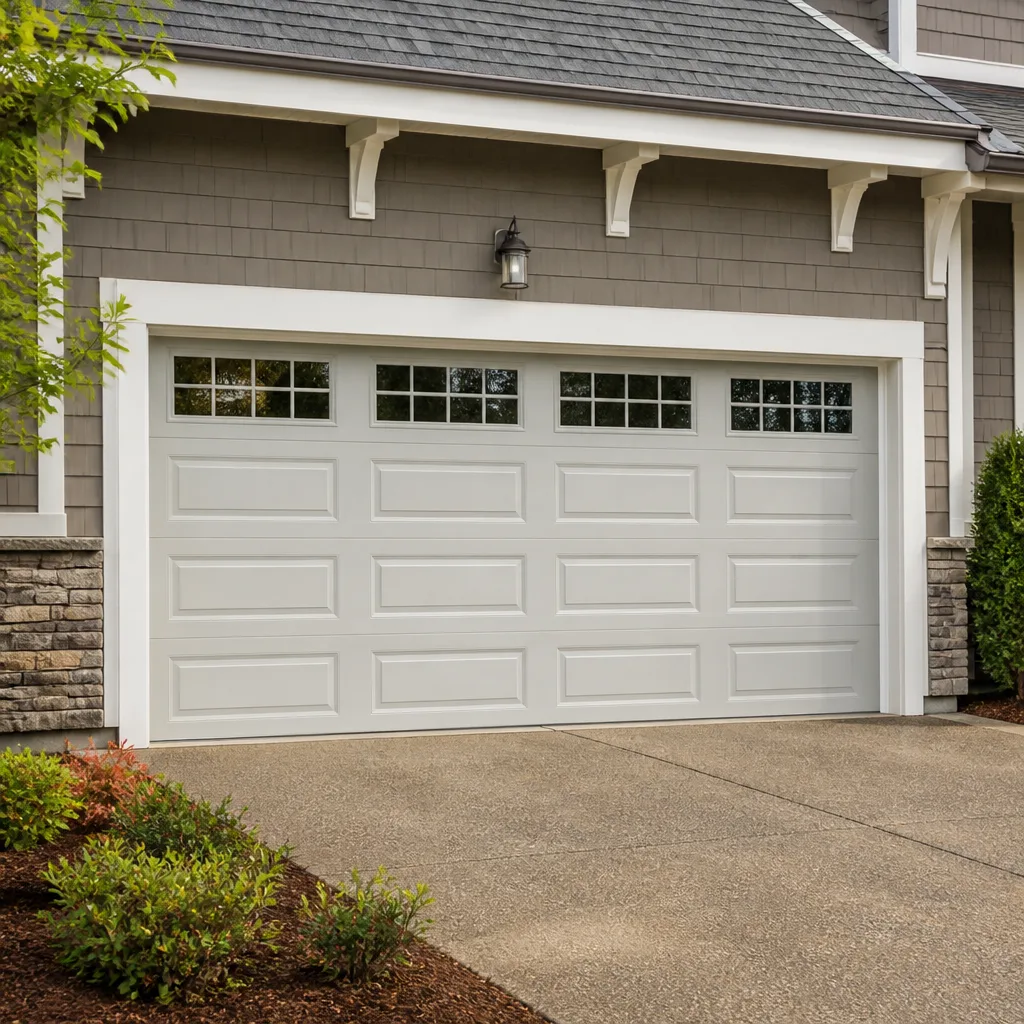 Raised-panel steel
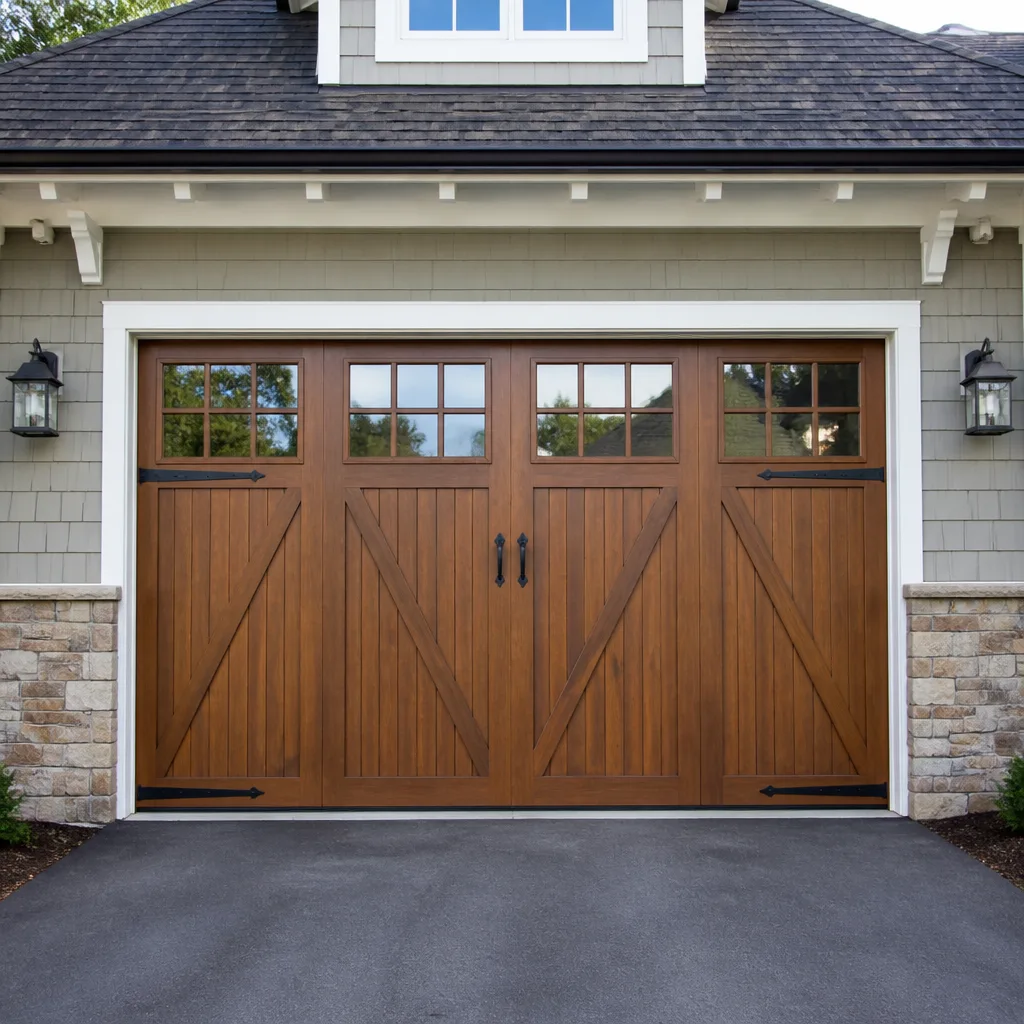 Carriage house
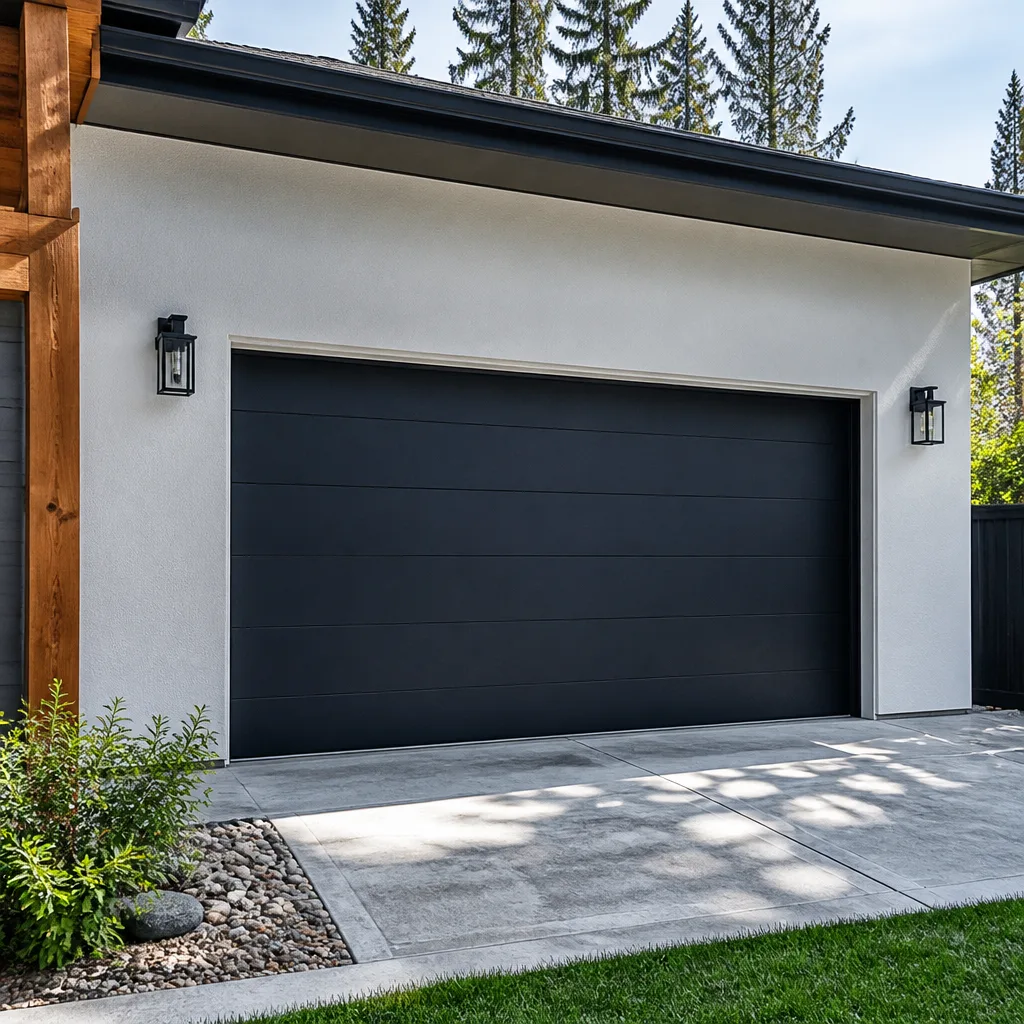 Modern flush
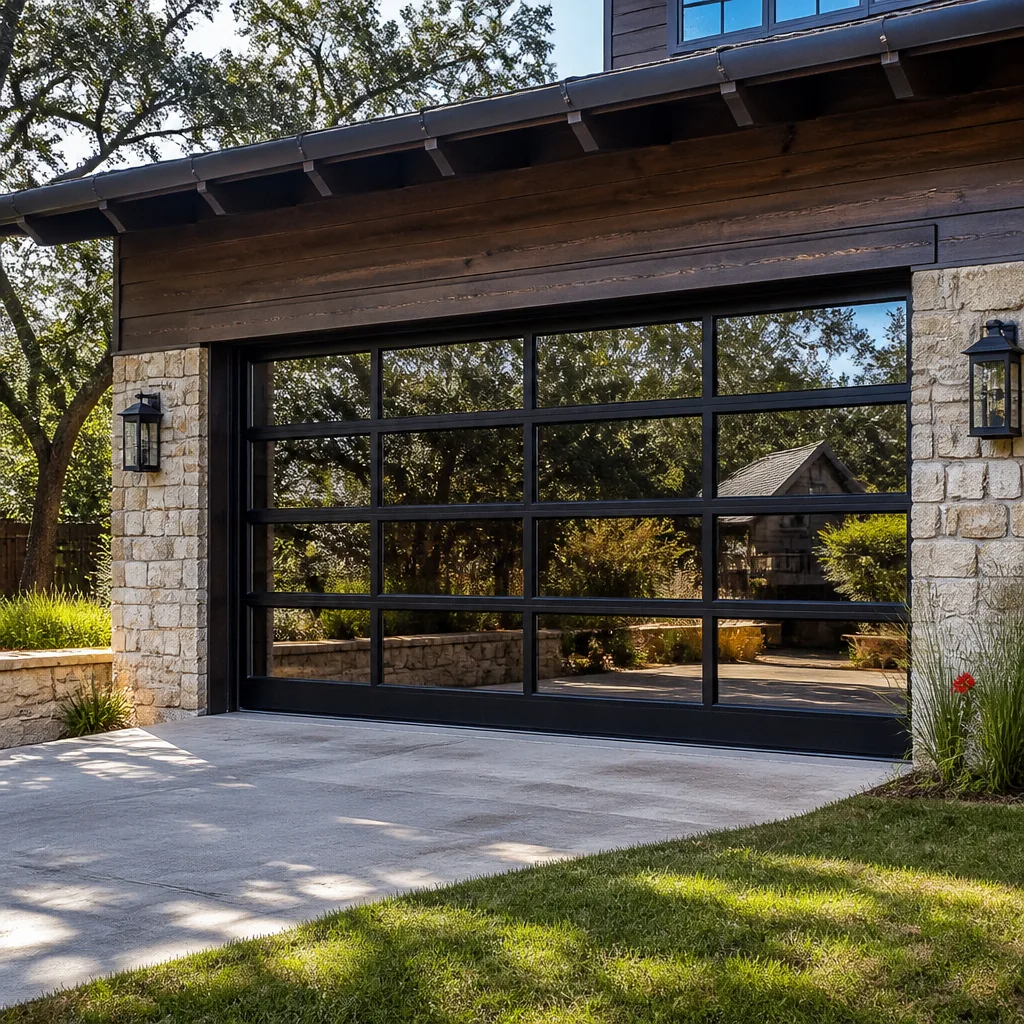 Full-view glass
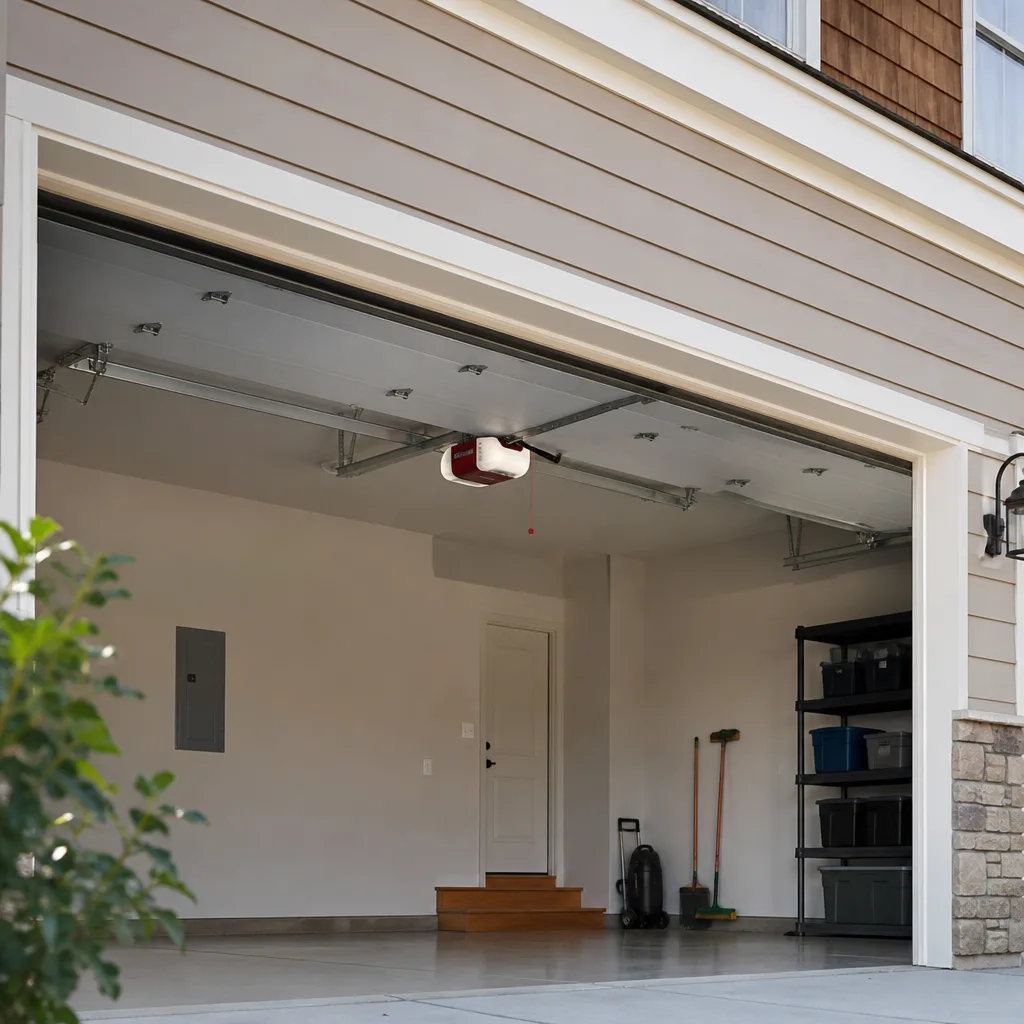 LiftMaster openers
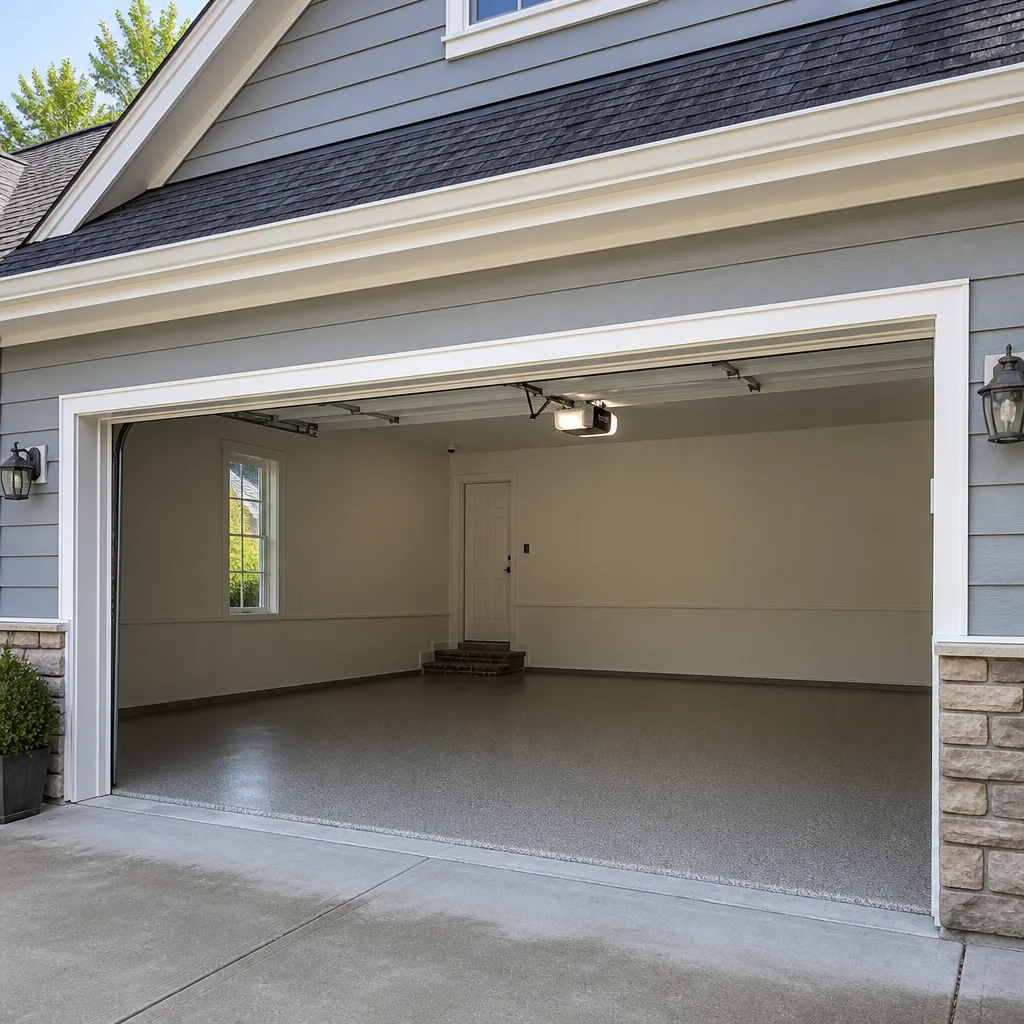 Chamberlain openers
Full 25-point door and opener safety check with every visit - springs, cables, rollers, tracks, and your LiftMaster or Chamberlain opener included
You get a price before we start. It does not change when the truck arrives.
Get your free estimateGarage Door Warning Signs: A Kissimmee Homeowner’s Reference Guide
A garage door that’s “just a little slow” isn’t a quirk. It’s a measurable sign that spring tension is dropping, and in a torsion spring system, that loss of tension is cumulative and non-reversible until the spring is replaced. Most Kissimmee homeowners don’t discover this until the door refuses to open on a Monday morning or, worse, comes down faster than it should. This guide—along with our more guides & resources—explains what your garage door is trying to tell you, which symptoms map to which components, and when a repair call now saves you a replacement bill later.
Styles & brands we work with
Quick Answer
The most common garage door warning signs in Kissimmee are a door that’s slow or uneven when opening, grinding or squealing sounds, a door that reverses before touching the floor, visible rust on springs or cables, and an opener that hesitates on cold starts. The majority of these symptoms involve either the springs, the opener’s drive mechanism, or the safety sensors. A spring issue typically costs $180 to $340 to fix if caught early; ignoring it can lead to a snapped cable, a bent track, or a door that comes off its rollers entirely.
Table of Contents
- How to Tell a Spring Problem From an Opener Problem From a Track Problem
- What an Uneven Gap at the Bottom Seal Actually Means
- Rust on Garage Door Components: A Graded Risk Assessment
- Opener Warning Signs: Software and Sensor Issues vs. Mechanical Failure
- The Two Warning Signs Kissimmee Homeowners Dismiss Most Often
- What Each Warning Sign Costs to Fix in Kissimmee
- Common Mistakes to Avoid
- When to Call a Professional
- Frequently Asked Questions
- The Bottom Line
How to Tell a Spring Problem From an Opener Problem From a Track Problem
Most garage door symptoms look the same to an untrained eye: the door is slow, or noisy, or won’t open. But the fix ranges from a $20 lubrication service to a $900 replacement, and the difference comes down to where the problem lives. You don’t need tools to narrow it down. You need to observe three things: sound, movement, and balance.
Here’s how we diagnose each system when a Kissimmee homeowner calls us with a “door acting weird” complaint.
- Sound first. A spring problem produces a sudden, loud bang when the spring breaks, but before that, you’ll hear creaking or popping from above the door when it moves. An opener problem makes grinding, rattling, or humming from the motor housing at the ceiling, usually accompanied by the chain or belt slipping. A track problem produces scraping or squealing from the side rails, especially near the bottom of travel.
- Movement next. A door with weak springs moves unevenly, tilts slightly as it travels, or slams shut faster than normal. An opener with a worn gear or bad capacitor moves the door normally sometimes, then struggles or stalls other times. A door with a misaligned track jerks or binds at the same point on every cycle.
- Balance test last. Pull the red release handle to disconnect the opener. Lift the door manually halfway and let go. A properly balanced door stays roughly put. A door with a weak or broken spring drops or feels heavier on one side. This test, performed correctly, isolates the spring system from the opener entirely.
In Kissimmee, where humidity accelerates wear on torsion springs, we see spring fatigue start showing up as early as year five or six on doors that cycle twice daily, which is why we recommend Seasonal Garage Door Care for Kissimmee: Year-Round Homeowner’s Guide. A spring replacement is roughly $180 to $340 depending on spring size and door weight. An opener repair typically runs $120 to $300. A track realignment usually falls between $100 and $200. The trick is knowing which one you’re dealing with before a guess-and-swap technician starts throwing parts at it.
We service the brand you have, whether that’s a Clopay door on a Genie opener or an Amarr door paired with a Chamberlain motor, and we can help you navigate options with our Choosing the Right Garage Door Brand: A Buyer’s Guide for Kissimmee. Knowing the equipment is half the diagnosis.
What an Uneven Gap at the Bottom Seal Actually Means
If you look at your garage door from outside and see daylight on one side of the bottom seal but not the other, the problem is rarely the seal itself. The gap means the door is sitting unevenly, and the cause falls into one of three categories: panel warp, track misalignment, or foundation shift. Here’s how to tell them apart and which one needs immediate attention.
Panel warp is the most benign cause. In Kissimmee’s heat and humidity, steel panels expand and contract at different rates depending on sun exposure. A door facing south or west catches direct sun for hours, and the bottom panel can bow slightly. Confirming panel warp is straightforward: disconnect the opener, lower the door by hand, and look along the bottom edge for a curve. If the panel itself is bowed, the fix is usually a strut reinforcement installed across the panel, which costs $150 to $250. This is a repair, not a replacement situation.
Track misalignment shows up as a gap that changes with door travel. Watch the door from inside the garage as it closes. If the gap appears only in the last few inches, or if one side makes contact with the floor before the other, the door has drifted out of its track alignment. Track brackets can loosen over time from vibration, and in Kissimmee’s sandy soil, even tiny shifts in the concrete floor can magnify misalignment. A professional track realignment costs $100 to $200 and should be done before the door binds enough to pull a cable off its drum.
Foundation shift is the one that’s urgent. Central Florida sits on limestone and sandy fill, and Kissimmee homes built on expansive or poorly compacted soil do shift. When the garage slab cracks or settles unevenly, the floor itself is no longer level, and no adjustment to the door can fix a floor that has moved. The tell is a crack in the concrete running from the door opening toward the back of the garage, combined with a gap that’s consistent whether the door is open or closed. If you see this, address the door adjustment first to keep operating, then bring a foundation specialist in for evaluation. Fixing the door before checking the slab is a waste of money in this case.
We’ve adjusted doors in Kissimmee for uneven sitting on dozens of homes from Mill Run to Crescent Lakes, and the bottom seal gap is frequently the first visible symptom of a problem that started months earlier at the track brackets.
Rust on Garage Door Components: A Graded Risk Assessment
Rust is not a single condition. It’s a progression, and knowing which stage your springs, cables, and track brackets are in determines whether you’re dealing with a cosmetic annoyance or a structural liability. In Kissimmee, where average humidity runs 70 percent or higher through most months, rust develops faster than homeowners expect, especially on doors that face north and stay shaded.
Here’s the grading system we use on service calls.
- Stage 1: Surface oxidation. A light, uniform reddish-brown dusting on springs or hardware. It wipes off partially with a rag. The metal underneath is intact. Service life is not meaningfully reduced. A professional lubrication with a rust-inhibiting product typically costs $60 to $100 and extends the component’s life.
- Stage 2: Pitting. The surface feels rough. You can see small craters where oxidation has eaten into the metal. On torsion springs, pitting creates stress concentration points that eventually become a break. On cables, pitting means individual strands are compromised. This is the stage where we recommend budgeting for spring replacement within 6 to 12 months. Springs run $180 to $340 installed; cables run $120 to $200 for the set.
- Stage 3: Structural corrosion. Flaking, scaling, visible thinning, or a gap appearing between spring coils. On track brackets, this means the bracket may not survive the next strong wind gust or door cycle. On cables, if you can see broken strands, the cable can fail at any cycle. This is no longer a maintenance conversation. Replace the component before it fails under load.
One detail worth noting for Kissimmee specifically: homes near water, particularly around Lake Toho or Shingle Creek, see accelerated corrosion. Salt air is less of a factor than many think; it’s the constant humidity and warm temperatures that keep rust reactions moving year-round, unlike northern climates where winter pauses oxidation for months. If you can reach up and feel rust flakes coming off your spring, you’re not at Stage 1 anymore.
Opener Warning Signs: Software and Sensor Issues vs. Mechanical Failure
The garage door opener is the most misdiagnosed component in the entire system. Because it’s the part with blinking lights and error codes, homeowners assume it’s the brains behind everything. In reality, the opener is a motor with a logic board, and many opener symptoms are actually door symptoms that the opener is reacting to. Replacing the opener before diagnosing the door is one of the most common expensive mistakes we correct in Kissimmee.
Opener problems split into two categories: electronic issues and mechanical wear.
Electronic and sensor issues usually produce intermittent, repeatable patterns. The door reverses mid-cycle for no visible reason. The opener beeps but doesn’t move. The remotes work sometimes and not others. The wall button works but the remote doesn’t. These point to the logic board, the safety sensor alignment, or the capacitor, depending on the specific behavior. The fix is frequently diagnostic and component-level: a replacement capacitor runs $80 to $150, sensor realignment runs $75 to $120, and logic board replacement runs $180 to $300 depending on brand.
Mechanical opener failure shows up as grinding without movement, the motor running but the door staying put, or the chain or belt slackening and slapping against the rail. This means the drive gear, sprocket, or belt has failed. These are fixable components, not reasons to replace the whole unit. A gear replacement on a Craftsman or Chamberlain opener runs $120 to $200. A belt replacement runs $150 to $250. We repair openers from LiftMaster, Chamberlain, Genie, and Craftsman rather than defaulting to a new unit sale.
Before any opener gets replaced, the door itself must run smooth and balanced manually. If the door is heavy, no opener, new or old, will last. That’s the “repair first” principle in practice: diagnose the door, then the opener, then spend money.
For a deeper dive on opener-specific problems, see our Garage Door Opener Repair in Lakeland Highlands guide, which covers the diagnostic sequence we use on every opener call.
The Two Warning Signs Kissimmee Homeowners Dismiss Most Often
If we had to rank the symptoms that cost homeowners the most money when ignored, two stand out above the rest. We see them in every Kissimmee neighborhood, from Poinciana to downtown, and they almost never get called in until they’ve caused secondary damage.
Symptom 1: Intermittent reversal on closing. The door starts down, gets partway, and comes back up. Occasionally. Not every time. The homeowner assumes a minor sensor blip or blames the remote. What’s actually happening, in most cases, is that the safety sensors near the floor are drifting out of alignment, or a spider web or humidity film is disrupting the infrared beam. Florida bugs love sensor lenses. The fix is usually a $75 to $120 realignment and cleaning, plus maybe a sensor bracket replacement. But ignored, the behavior teaches the homeowner to stand there holding the wall button, which bypasses the safety system. That’s how a door eventually closes on a child’s bike or a car bumper, and how an opener’s force settings get overridden into dangerous territory.
Symptom 2: Delay in opening from cold start. You press the button and nothing happens for two or three seconds, then the door jerks to life. Or you have to press the remote twice. The homeowner interprets this as a remote battery issue and swaps batteries, which doesn’t fix it. The real cause is the motor start capacitor, a component that stores the electrical jolt needed to get the motor spinning from a dead stop. In Kissimmee’s heat, capacitors degrade faster than the motors they serve. A replacement runs $80 to $150. If you ignore it long enough, the motor eventually fails from repeated hard starts, and that’s a $350 to $500 replacement instead.
Both symptoms are cheap to fix and expensive to ignore. That’s the theme of this whole guide, honestly.
What Each Warning Sign Costs to Fix in Kissimmee
Homeowners deserve straight numbers before they pick up the phone. Here’s what we quote on a typical Kissimmee service call, based on the work we do across the city and the surrounding area. These are ballpark ranges; exact pricing depends on door size, brand, and what we find on site. Every price is quoted and agreed before work starts, in writing, so there’s no surprise number at the end.
- Loud bang, door won’t open, cables dangling: Broken torsion spring. $180 to $340 for spring replacement depending on door weight. Both springs are typically replaced together since the second spring is near the end of its life.
- Door heavy, opens a few inches, stops: Weakened spring or broken spring with opener force limit tripping. Same spring replacement range, $180 to $340, plus possible opener force reset at $50 to $80.
- Grinding from motor, door not moving: Worn drive gear in opener. $120 to $200 for gear replacement on most Chamberlain, LiftMaster, and Craftsman models.
- Door reverses before fully closing: Safety sensor misalignment or obstruction. $75 to $120 for realignment and cleaning.
- Door jerks to a stop, binds at one point, squeals: Track misalignment or bent track section. $100 to $200 for realignment, $150 to $300 if a track section needs replacement.
- Door sits uneven with gap at bottom: Panel warp strut reinforcement ($150 to $250) or track adjustment ($100 to $200), depending on cause.
- Rust flakes falling from spring, broken cable strands visible: Spring and cable replacement set. $300 to $540 combined depending on door size.
- Opener hums but won’t start, or needs multiple button presses: Start capacitor replacement. $80 to $150 installed.
What separates a $150 service call from a $900 emergency replacement is usually a matter of timing. A spring that’s been creaking for three months breaks on a Sunday. A track that’s been misaligned for a year finally pulls the cable off the drum, and the door crashes down. The car is inside or outside, and suddenly it’s an emergency. That’s when prices climb because the work can’t wait and the damage is bigger.
If you’re seeing any of these symptoms, the time to call is before the failure. Estimates are free, and we do full diagnostic work on the first visit. For door repairs, our Garage Door Repair in Lakeland Highlands page explains what a typical repair visit includes.
Common Mistakes to Avoid
- Silencing the symptom instead of the cause. Spraying WD-40 on a squealing door quiets it for a week, but the squeal was a dry bearing or a failing spring, and now the warning sign is gone while the problem keeps growing. Proper lubrication means specific products on specific parts, not a general spray.
- Replacing the opener when the door is the problem. A heavy, unbalanced door will eat any opener, new or old. If your opener “died” but the door was getting harder to lift manually before that, the spring was likely failing first, and the new opener will die the same way.
- Adjusting the travel limits to force a misaligned door to close. The travel limit setting tells the opener how far to push. Cranking it up to overcome a door that’s binding in the track is how you bend a panel or strip a gear. Fix the track first.
- Ignoring a bottom gap because “it’s just a small crack of light.” That gap lets Kissimmee humidity, insects, and field mice into the garage, and it’s a symptom of a structural alignment issue that gets more expensive the longer it runs.
- Watching a door reverse intermittently and deciding it’s “fine most of the time.” Intermittent means a sensor or capacitor is degrading. The fix is under $150 right now. The failure it causes later is not.
- Treating both springs as independent when one breaks. Torsion springs are engineered as a pair and wear together. Replace one, and the old second spring will fail soon after, and you’ll pay another service call fee to replace it. Change both.
- Hiring by price alone on an emergency. A cut-rate repair on a Saturday night often means the cheapest parts available and no follow-up if the fix doesn’t hold. The bargain disappears when the job has to be redone properly.
When to Call a Professional
You don’t need to diagnose your own garage door before calling us. You need to recognize when a symptom has moved past the point where waiting makes it worse. Here are the scenarios where we’d say pick up the phone the same day: a loud bang and a door that won’t move, a door that drops when released from the opener, visible broken strands on any cable, a door that’s come off one side of its track, any opener sparking or smoking, or a door that reversed onto a person or pet. Torsion springs hold enough tension to cause serious injury if mishandled; that’s not a DIY job under any circumstances. Cables under tension can cut through flesh like wire. If the symptom involves the spring or cable system, leave the door disconnected and call a professional.
Journeyman Garage Door Repair offers free estimates in Kissimmee. Call (833) 589-8916 and we’ll schedule a diagnostic visit, identify the failing component, and quote the fix before any work begins.
Frequently Asked Questions
A torsion spring replacement in Kissimmee typically runs $180 to $340 depending on door size and weight, including both springs and labor. The price is always quoted and agreed before work starts, and we replace springs as a pair since they wear together. Call (833) 589-8916 for an exact quote, estimates are free.
In most Kissimmee repair cases, yes. We carry common spring sizes and opener parts on the truck, so the majority of repairs are completed on the first visit. Call (833) 589-8916 and we’ll tell you when a technician can be at your door.
No. The diagnostic visit includes a full assessment, and the price we quote for the repair is the price you pay, agreed in writing before any work starts. If we find something unexpected, we show you and explain it, then you decide. The quote doesn’t change without your approval.
Intermittent reversal is almost always a safety sensor issue, either misalignment, dirt or humidity film on the lens, or a loose wire connection at the sensor. The fix is typically $75 to $120. If the reversal is accompanied by grinding or a humming sound, the problem is likely mechanical instead. Call (833) 589-8916 for a diagnosis.
We service eight of the most common garage door systems, including LiftMaster, Chamberlain, Genie, Clopay, Amarr, Wayne Dalton, Craftsman, and Raynor. We repair the door you actually have, not just the brands we happen to stock.
Light surface rust is normal in Central Florida humidity and can be addressed with lubrication. Pitting or flaking rust is a structural concern that means the spring should be replaced within months, not years. If you can see broken strands on cables or gaps between spring coils, the component is at failure risk. Call (833) 589-8916 for an assessment.
Standard torsion springs are rated for roughly 10,000 cycles, which translates to 7 to 10 years for a Kissimmee homeowner who cycles the door two to three times daily. Humidity can reduce that lifespan slightly. If your springs are more than seven years old and you’re noticing new noises or slower operation, a spring evaluation is a cheap insurance policy.
The Bottom Line
Garage doors talk. They creak, grind, hesitate, reverse, and sag when components are failing, and every one of those signals maps to a specific fix with a specific price range. The spring that groans before it snaps could have been a $180 to $340 replacement instead of a $900 emergency. The opener that started hesitating on cold starts could have been a $100 capacitor instead of a $400 motor. The goal of this guide is simple: listen to the door, figure out which system is talking, and call before the conversation turns into an emergency. Our specialist-only team works on garage doors every day, not as a side service, and we repair the brand you have. If something on this list sounds familiar, call (833) 589-8916 for a free estimate in Kissimmee. The door works, or we’re not done.
Written by the team at Journeyman Garage Door Repair, serving Kissimmee since 2011.
See the difference
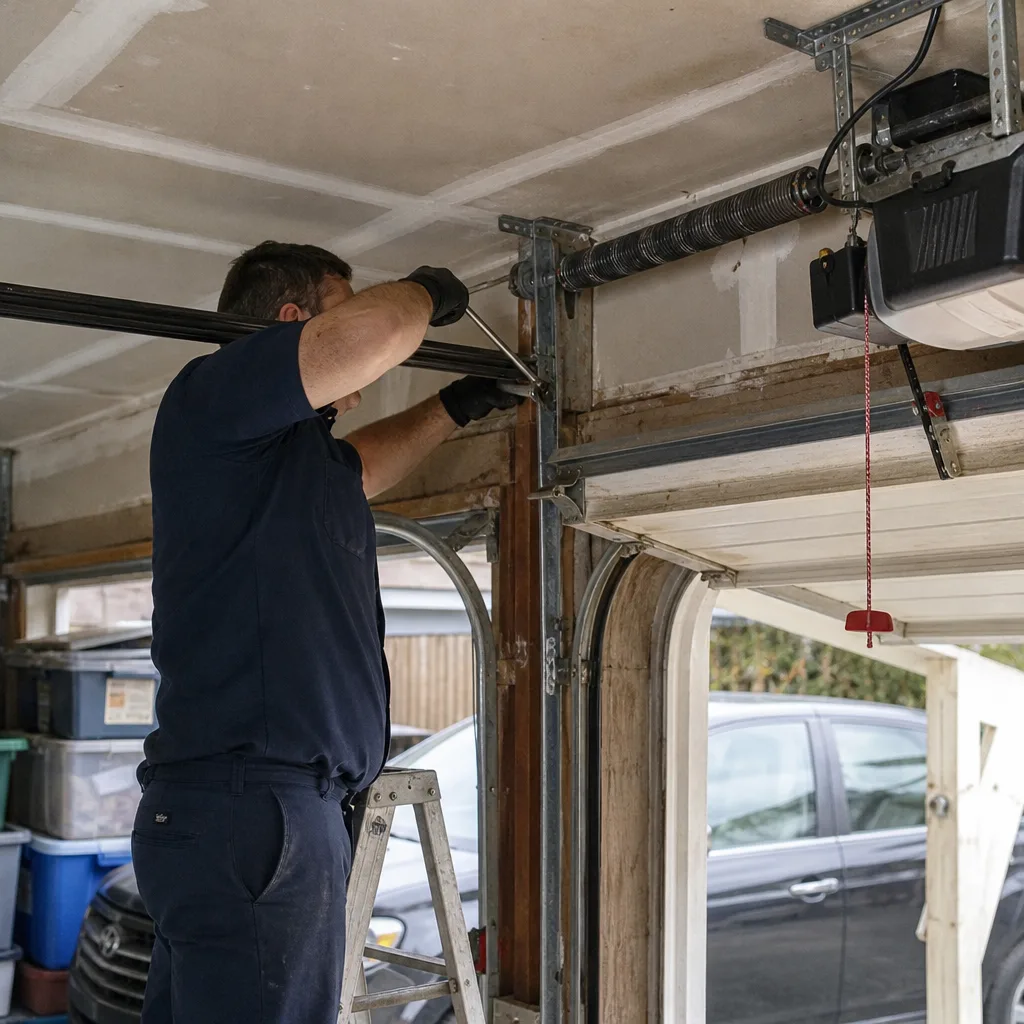 Before
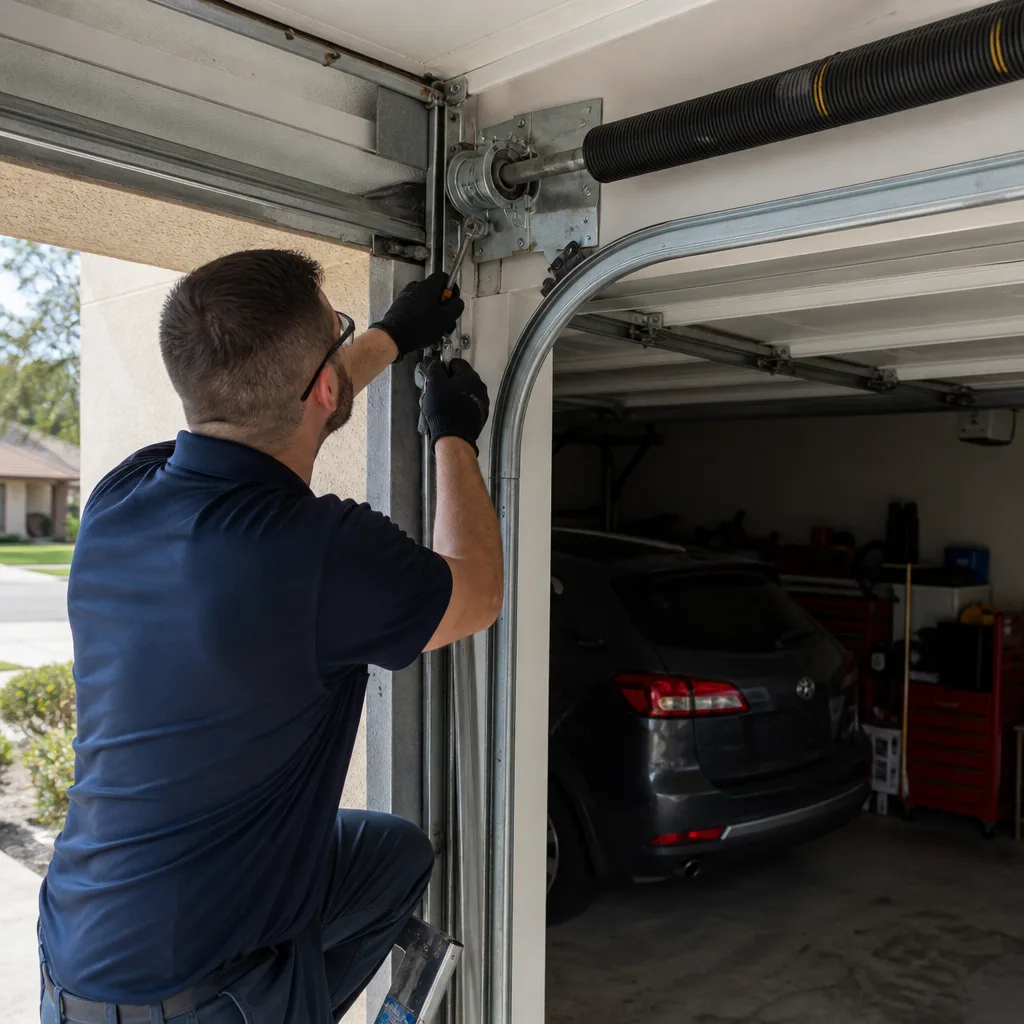 After
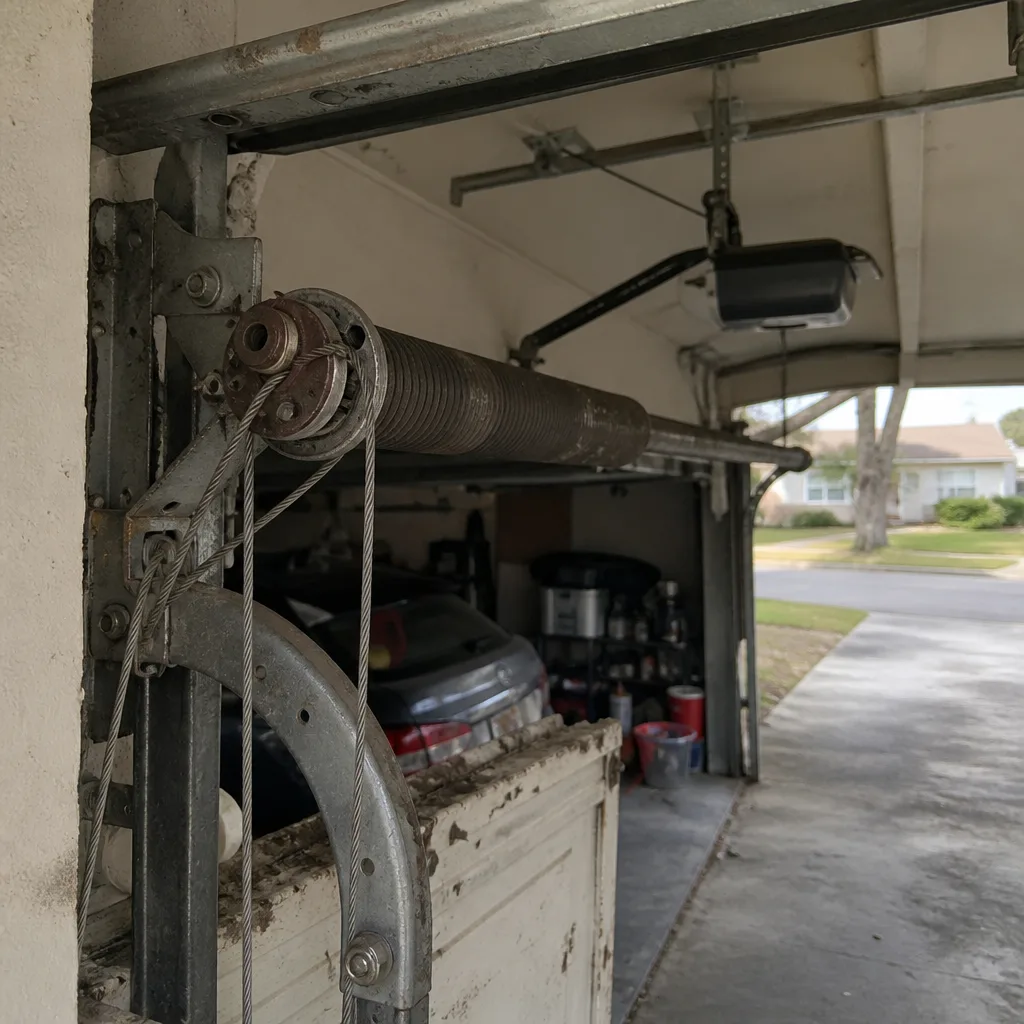 Before
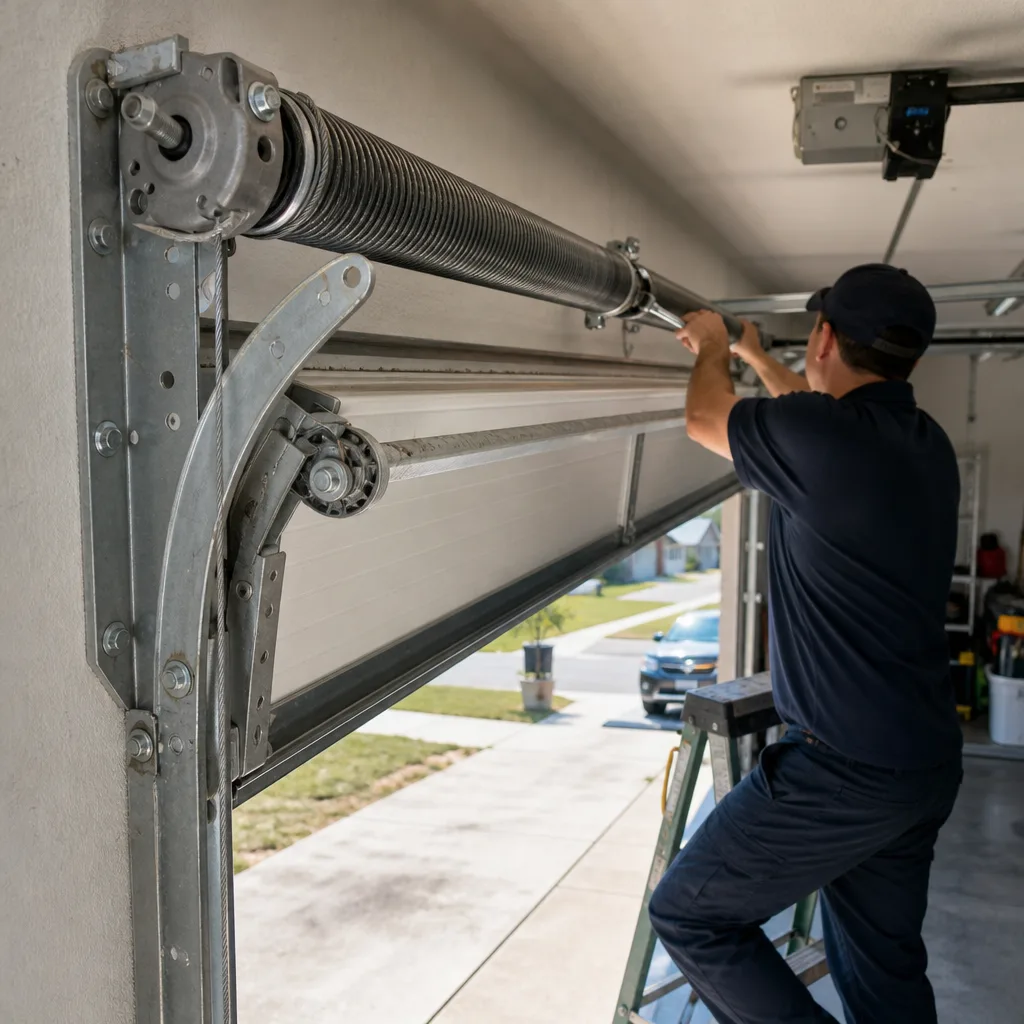 After
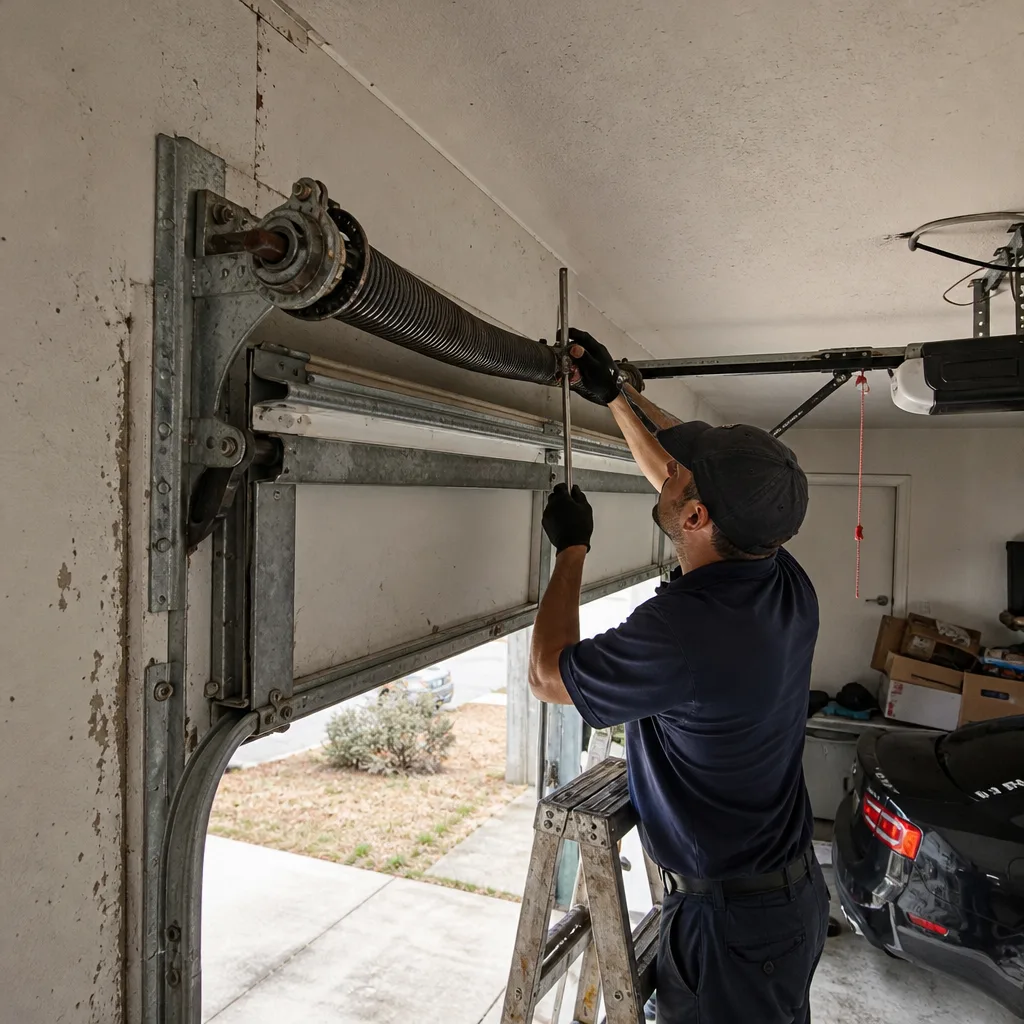 Before
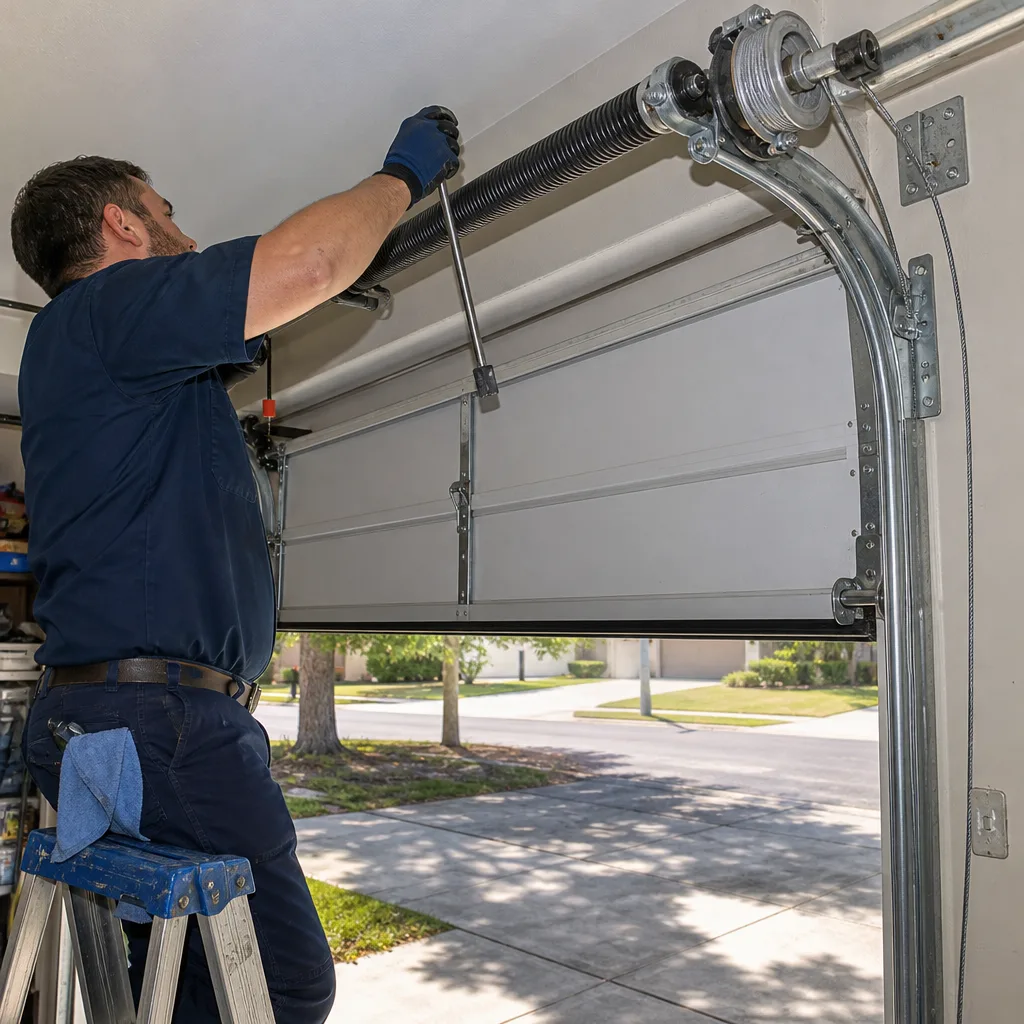 After