
Last updated October 31, 2026
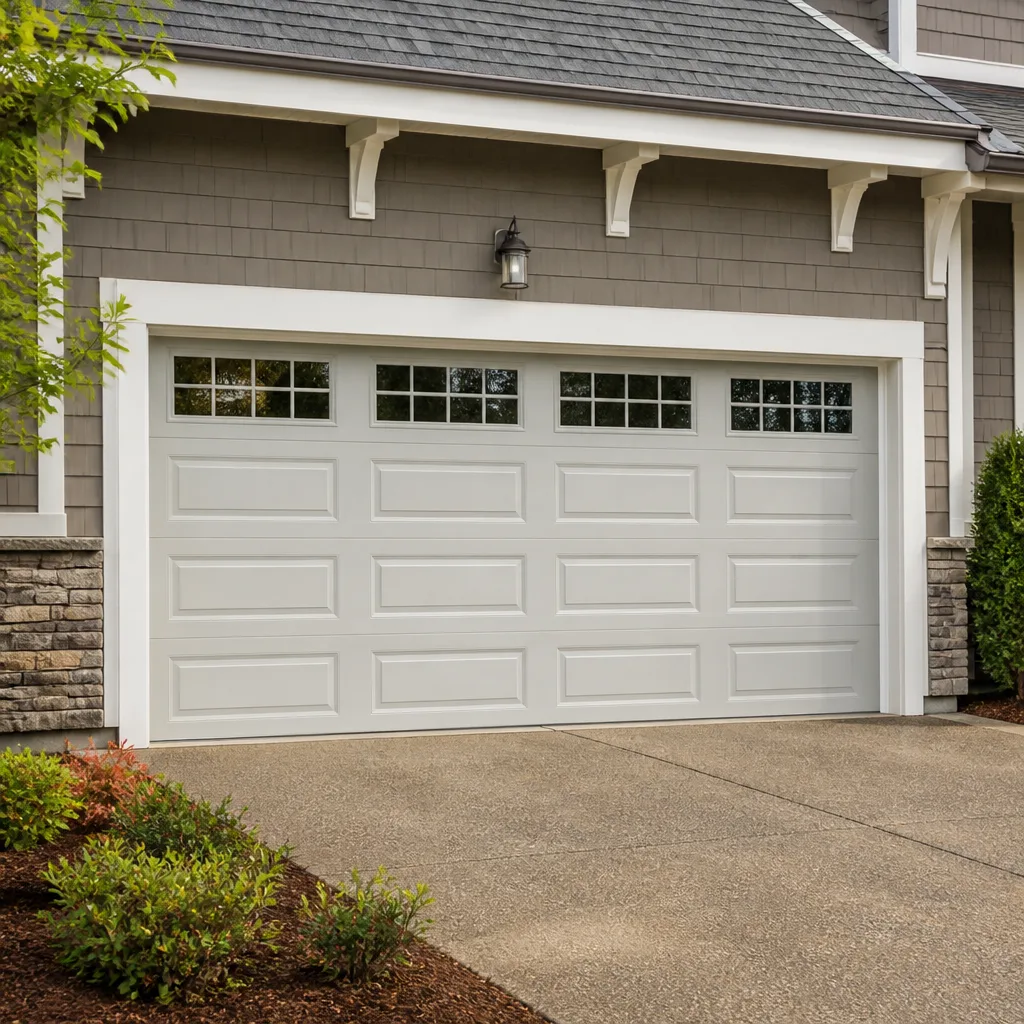 Raised-panel steel
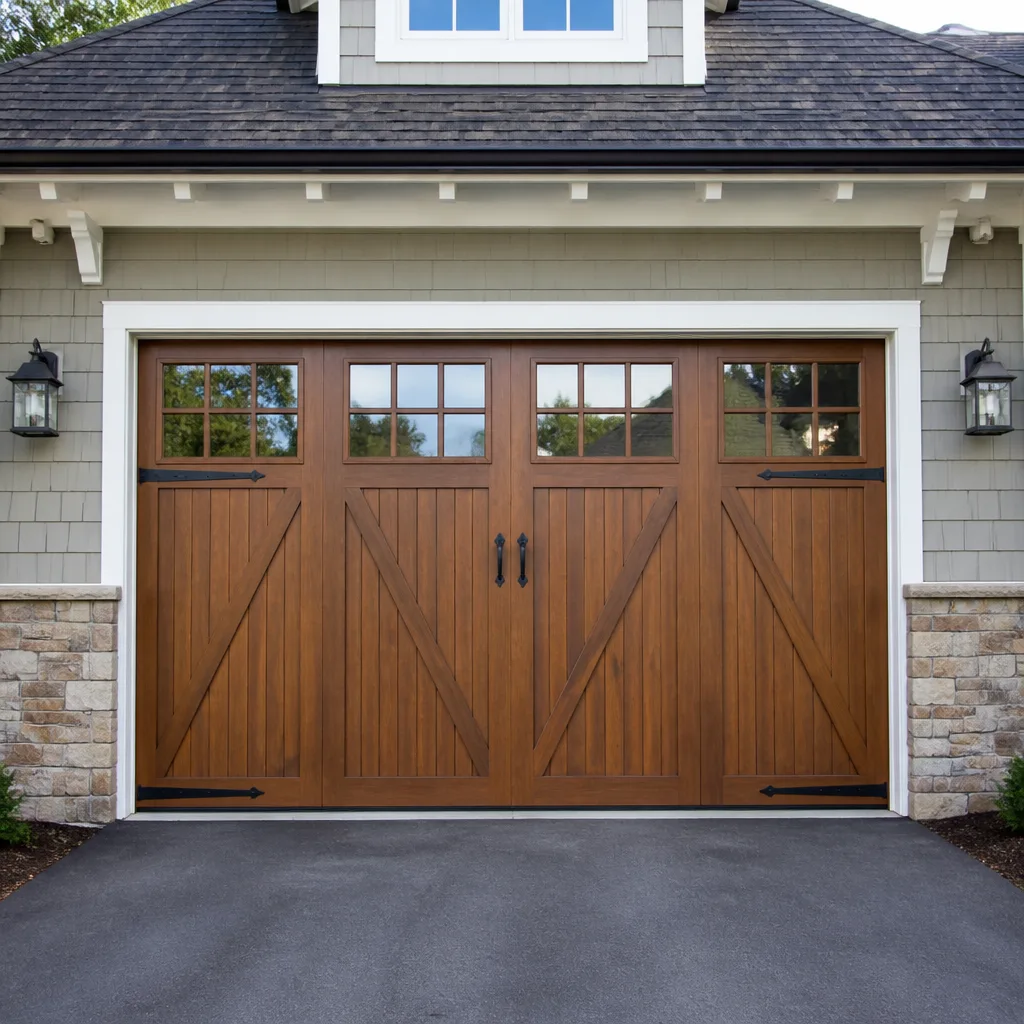 Carriage house
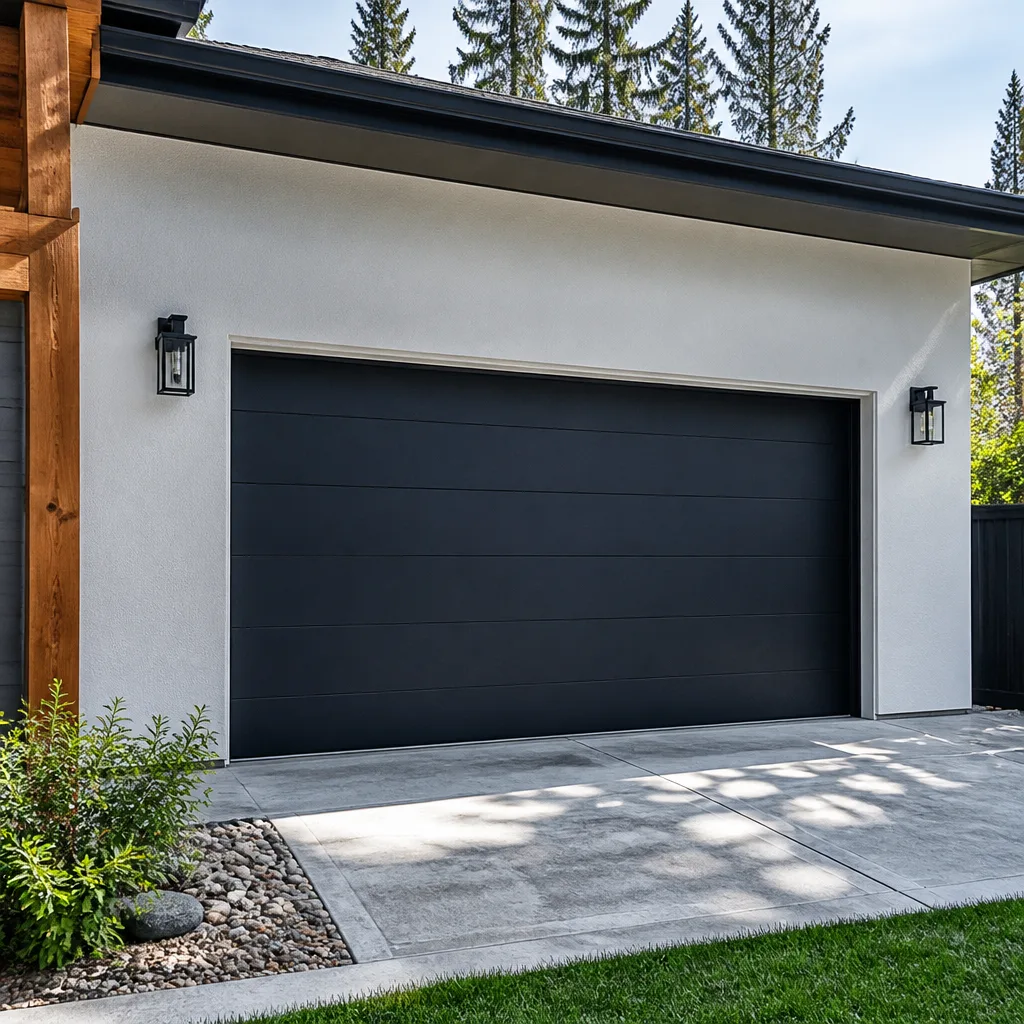 Modern flush
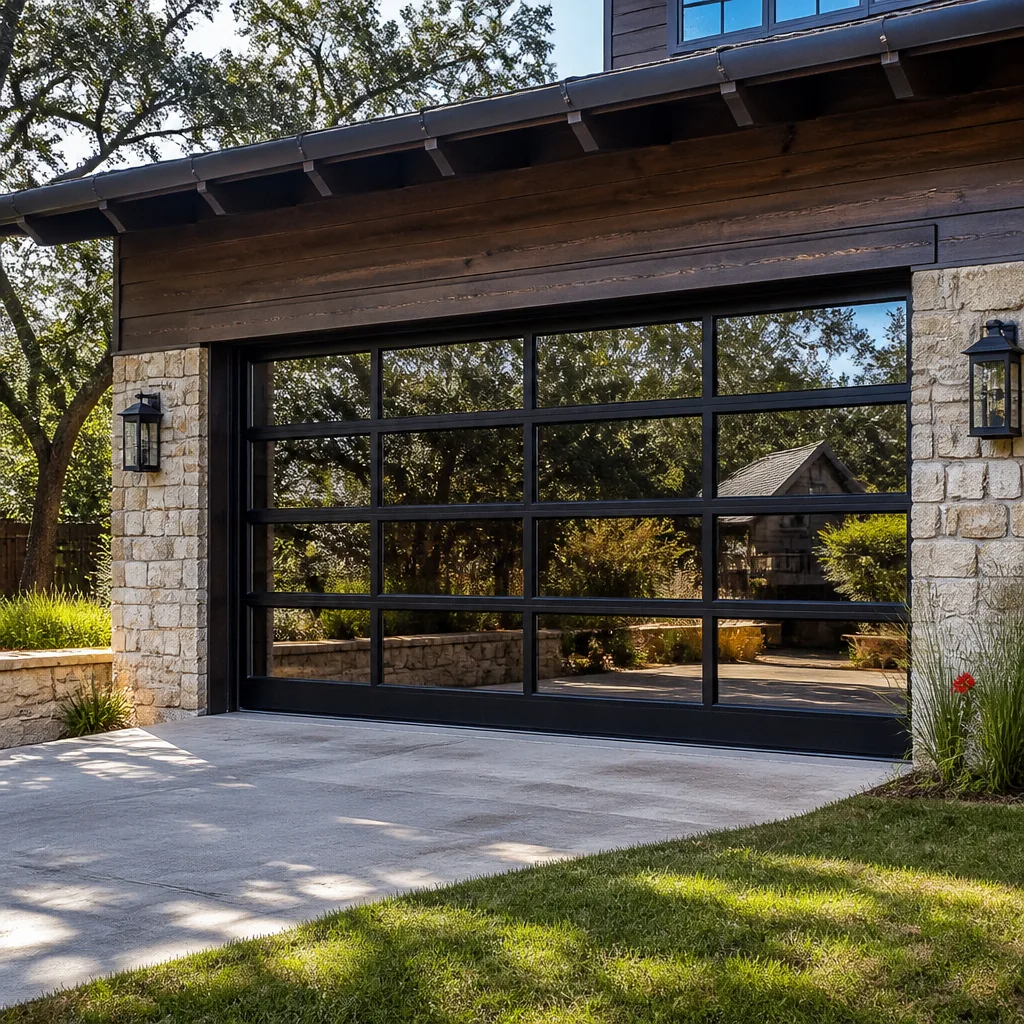 Full-view glass
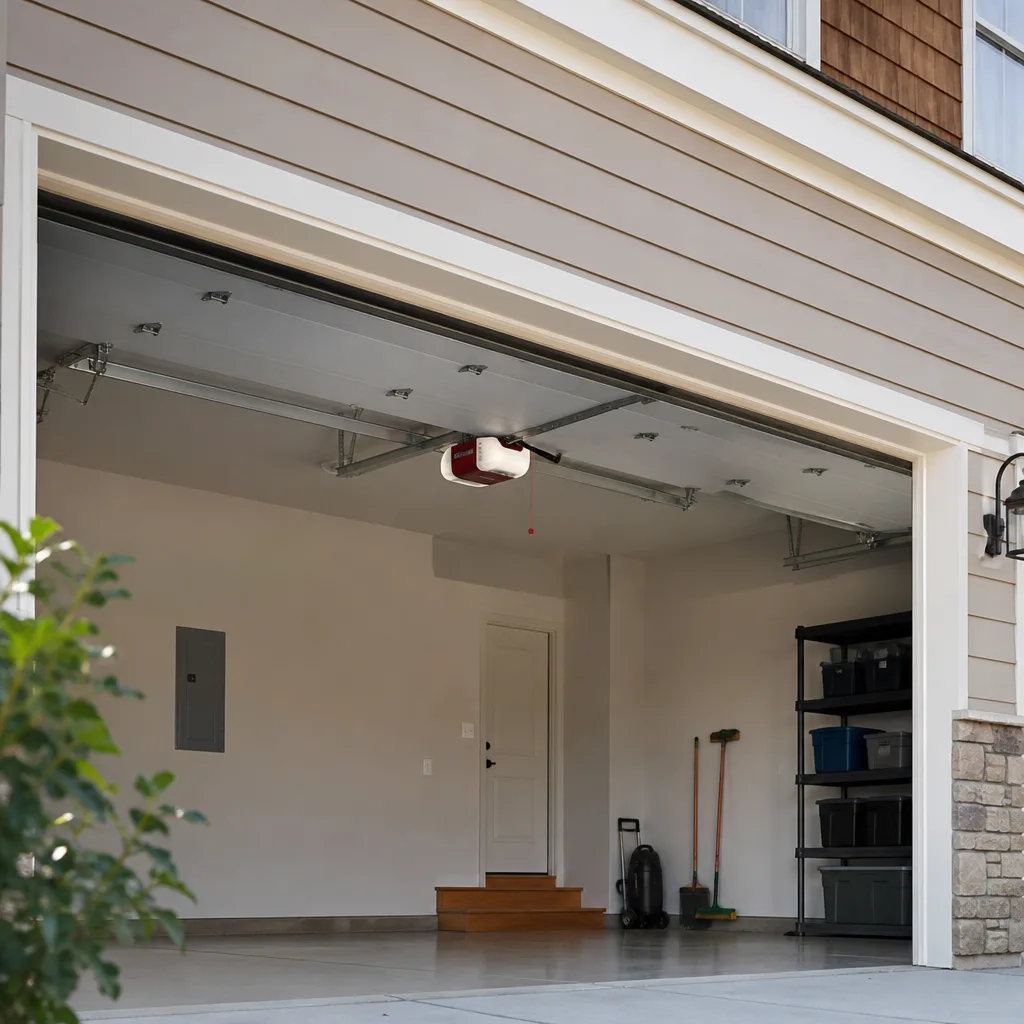 LiftMaster openers
 Chamberlain openers
Full 25-point door and opener safety check with every visit - springs, cables, rollers, tracks, and your LiftMaster or Chamberlain opener included
You get a price before we start. It does not change when the truck arrives.
Get your free estimateDIY vs Professional Garage Door: The Kissimmee Homeowner’s Decision Guide
Torsion spring replacement kills and seriously injures homeowners every year, not because they lack mechanical aptitude, but because a spring under 150+ foot-pounds of torque doesn’t care how many YouTube videos you watched. In Kissimmee, where garage doors cycle thousands of times a year in heat that accelerates metal fatigue, that risk is compounded by a factor most guides never mention: our humidity corrodes cables faster than inland climates, which means the safety margins on older doors shrink quietly between inspections. This guide draws the line precisely between what a competent Kissimmee homeowner can safely do on a Saturday morning and what belongs in the hands of a trade-level specialist.
Quick Answer
Most garage door maintenance tasks in Kissimmee are safe for a careful homeowner equipped with basic tools, but three specific jobs demand professional intervention: torsion spring replacement, cable repair under tension, and any work requiring a Florida building permit. The dividing line isn’t skill, it’s stored energy and code compliance. If the component you’re touching is under mechanical load or the repair gets inspected by Osceola County, call a specialist. Everything else, from lubrication to weatherstripping to sensor realignment, is fair game for DIY.
Styles & brands we work with
Table of Contents
- What’s Genuinely Safe for a Kissimmee Homeowner
- DIY-Adjacent Tasks with Hidden Risk
- Why Torsion Springs Are a Hard No
- Florida Permits and Osceola County Code
- How DIY Affects Opener Warranties
- The Honest Cost Comparison: DIY vs Callback Risk
- Tools We See in Kissimmee Garages
What’s Genuinely Safe for a Kissimmee Homeowner
Let’s start with the tasks we tell our own neighbors in Kissimmee to handle themselves. These four jobs require no specialized tools, carry no mechanical risk, and will extend the life of your door between professional service visits.
1. Lubrication
A can of white lithium grease or silicone spray costs about $8 at any Kissimmee hardware store. Apply it to hinges, rollers, and the opener rail every six months. In our climate, we recommend every four months because summer dust and humidity create a paste that accelerates roller wear. Avoid WD-40 for this job, it’s a solvent, not a lubricant. It will strip the existing grease and leave metal-on-metal contact within a few weeks.
2. Sensor Alignment
If your door reverses when closing or won’t close at all, the problem is usually the photo-eye sensors at the base of the track. Check that both lights are solid, not blinking. Loosen the wing nut, adjust the sensor so it points directly at the receiver on the opposite side, and retighten. This takes ten minutes and fixes roughly a third of “my opener is broken” calls we get in Kissimmee, especially in neighborhoods like Poinciana and Buenaventura Lakes where afternoon sun glare can trip sensors.
3. Weatherstripping Replacement
The rubber strip along the bottom of your door degrades fast in Florida heat. When it cracks or flattens, rainwater seeps in during our summer thunderstorms and bugs find a highway into your garage. A replacement T-seal costs $15 to $30 at any big-box store in Kissimmee. Slide out the old one, slide in the new one. No tools beyond a utility knife to trim the ends. This is the single highest-value DIY task for Florida homeowners because it directly prevents the moisture damage that leads to expensive track corrosion.
4. Minor Panel Touch-Up
Surface scratches and small dents don’t need a new panel. Sand lightly, apply automotive touch-up paint matched to your door color, and the fix is invisible from five feet. For aluminum doors common in Kissimmee’s 1980s and 1990s subdivisions, use a metal-specific primer first to prevent oxidation. This is cosmetic work with zero safety implication.
These four tasks account for maybe 20% of garage door service calls. Learning them saves you money and keeps your door operating smoothly between professional inspections. The Journeyman Garage Door Repair home guide walks through additional maintenance steps if you want to go deeper.
DIY-Adjacent Tasks with Hidden Risk
Now the gray zone. These are jobs that look simple on video but carry failure modes a homeowner can’t see. In our experience, these are the calls where a “quick fix” turned into a $400 repair.
Spring Tension Adjustment
Older doors in Kissimmee, especially in the older sections of Downtown and Oak Hollow, often have extension springs rather than torsion springs. Extension springs are the long springs that run parallel to the track. They look approachable. They are not. When one fails while under load, it becomes a projectile. One end releases, and the spring, still under hundreds of pounds of tension, whips through the air at speeds that have sent homeowners to the ER with facial fractures. If your door sags on one side or the balance feels off, that spring needs adjustment. Do not attempt it without a winding tool and a torque wrench at minimum, but honestly, we don’t recommend it even then. The cost of a professional spring replacement in Kissimmee, typically $180 to $340, is less than a single urgent care visit.
Cable Re-Seating
If a cable slips off the drum, the door often stops midway or tilts. The instinct is to grab the cable and guide it back. Here’s what you don’t know: that cable is connected to the spring system. When the door moves with a cable off the drum, the remaining cable is absorbing uneven load. If it snaps while your hand is on it, the cable edge can sever fingers. We’ve seen the aftermath. Re-seating a cable requires releasing tension properly, resetting the drum, and re-balancing the door. That’s a professional job, period.
Track Realignment
Tracks can bend from a car bump or years of thermal expansion and contraction in Kissimmee’s heat. A bent track is a gradual killer: it causes the door to scrape, which wears rollers unevenly, which puts lateral load on the opener, which eventually burns out the motor. Straightening track with a rubber mallet is possible for minor bends, but the subtlety is this: if you over-correct, the track pinches the roller and the door binds. A bound door can break a cable. We recommend realigning track only if the bend is visibly minor (under a quarter inch) and you have a level and patience. Anything structural, call us.
Why Torsion Springs Are a Hard No
We’re dedicating an entire section to this because it’s the number one cause of garage door fatalities in the United States. The Consumer Product Safety Commission estimates that roughly 30,000 people per year are injured by garage doors, and a disproportionate number of those injuries involve torsion springs. In Kissimmee, where doors see heavy daily use in communities with multiple vehicles, springs fail more often than national averages.
A torsion spring is the thick coil mounted horizontally above your door opening. It stores energy by twisting, and that energy is measured in foot-pounds. A typical residential torsion spring holds between 130 and 160 foot-pounds of torque when the door is in the closed position. When that spring breaks, it releases that energy instantly. If you are standing near the winding cone when it lets go, the cone becomes a two-pound metal projectile traveling at speeds that can and do cause traumatic brain injury.
The tools required, two steel winding bars about 18 inches long, are cheap and sold at hardware stores across Kissimmee. The problem is that using them correctly requires years of feel. One bar slips, and the torsion transfers to the second bar, which spins and strikes whatever is in its path. Our technicians at Journeyman have replaced hundreds of torsion springs. Every single one of them will tell you the same thing: the margin for error is measured in inches, and the cost of being wrong is life-altering.
For anyone reading this who owns a home in Kissimmee: torsion spring replacement costs between $180 and $340 including parts and labor. That price includes the spring, the winding bars, the technician’s expertise, and the liability. Do not let YouTube tell you it’s a $40 parts-only job. That $40 spring is the same part. The difference is who’s holding the winding bar when it slips.
Florida Permits and Osceola County Code
Here’s a segment most DIY guides skip entirely, and it matters in Kissimmee specifically. Florida building code, which Osceola County enforces, distinguishes between a repair and an improvement. Replacing a broken spring or a burnt-out opener motor is a repair. No permit required. Replacing an entire garage door assembly, including the track and panel system, is classified as a door replacement and technically requires a permit.
Now, in practice, Osceola County issues permits for garage door replacements, and many homeowners replace doors without pulling one. The risk isn’t the county showing up on your doorstep, the risk is what happens later. If you sell your home and the buyer’s inspection reveals an unpermitted door replacement, the sale can stall while you pull a retroactive permit, which means an inspection, which means fixing anything that doesn’t meet current wind-load standards. Kissimmee sits in a high-velocity hurricane zone. Doors installed after 2002 must meet Miami-Dade or Florida Building Code wind-load ratings. A door you buy at a bargain price from an online retailer may not meet those standards, and it will fail inspection.
The self-permit route exists. A Kissimmee homeowner can pull their own permit for a door replacement and do the work themselves. The catch is the inspection. The inspector checks wind-load certification, track anchoring, and spring containment. If the install fails, you’re redoing it. Most homeowners who try end up calling us after the first failed inspection, and the total cost exceeds what professional installation would have been from the start.
Our Garage Door Installation in Lakeland Highlands page covers the full scope of what professional installation involves, including code compliance and the wind-load requirements specific to Central Florida. The standards are the same across Polk and Osceola counties.
How DIY Affects Opener Warranties
This is the quiet trap in the DIY vs professional decision, and it’s especially relevant to the brands most common in Kissimmee garages: LiftMaster, Chamberlain, and Genie.
Here’s the reality of warranty language. LiftMaster and Chamberlain, both manufactured by the Chamberlain Group, require professional installation for the warranty to be registered in most cases. If you buy a Chamberlain opener from a big-box store in Kissimmee and install it yourself, the motor warranty may be reduced from lifetime to 10 years on the motor, or voided entirely, depending on the model. The parts warranty drops similarly. Genie has similar provisions on their higher-end models.
The myQ smart system is where this gets concrete. LiftMaster and Chamberlain openers with myQ are tied to the homeowner’s account. The app works regardless of who installed the unit. But if the opener fails, the warranty claim asks who installed the unit. A professional installer provides a receipt and model number that the manufacturer recognizes. A DIY install leaves the claim in a gray area, and we’ve seen manufacturers deny motor replacements on self-installed units, then offer a discounted replacement at 60% of retail instead.
For homeowners in Kissimmee who are comfortable doing their own opener install and accept the warranty risk, that’s a legitimate choice. Just make the choice with eyes open. The opener is the component most likely to fail early, in our experience, especially in communities with frequent power fluctuations during thunderstorm season. A warranty claim denied is a $200 to $400 motor replacement you weren’t planning on.
If your opener is acting up and you’re not sure whether it’s the motor, the gears, or the logic board, our Garage Door Opener Repair in Lakeland Highlands page walks through diagnostic steps and what repairs actually cost. The information applies equally to Kissimmee.
The Honest Cost Comparison: DIY vs Callback Risk
Here’s the section everyone wants and few guides deliver honestly. What does a Kissimmee homeowner actually save by doing it themselves, and when does DIY cost more than professional service?
Let’s use real numbers from the Kissimmee market.
- Lubrication: DIY costs $8 and 20 minutes. Professional cost: $60 to $80 as part of a maintenance visit. DIY wins, no question. Do this yourself.
- Sensor alignment: DIY costs $0 and 15 minutes. Professional cost: $75 to $100 for a service call. DIY wins. This is dealer-level easy.
- Weatherstripping replacement: DIY costs $15 to $30 and 30 minutes. Professional cost: $80 to $120 including parts. DIY wins unless the door is out of square and the seal won’t seat evenly, which happens on older Kissimmee homes with settled slabs.
- Panel touch-up: DIY costs $20 to $40 in materials. Professional cost: $150 to $300 for a panel replacement if the damage is structural. DIY wins for cosmetic damage. If the panel is cracked or the dent compromises the door’s wind-load rating, that’s no longer touch-up, that’s replacement, and DIY is not an option under code.
- Spring adjustment or replacement: DIY costs $40 to $80 in parts. Professional cost: $180 to $340. This looks like the biggest savings opportunity, and it’s the most dangerous place to save. One failed winding bar is an ER visit, and that ER visit will cost more than the professional repair even with insurance. DIY loses on risk-adjusted cost, and loses decisively.
- Cable replacement: DIY costs $20 in parts. Professional cost: $150 to $200. The hidden cost of DIY is the secondary damage: a cable that snaps under your hand can damage the track, the panel, and the opener rail. Professional replacement includes re-tensioning the entire system and re-balancing the door. DIY loses, because the failure mode is destructive.
- Opener repair: DIY costs $30 to $80 for parts if you correctly diagnose the problem. Professional diagnosis and repair: $120 to $250. The gamble here is diagnosis. If you replace a gear kit and the real problem is the logic board, you’ve spent $80 and still need a service call. We fix a meaningful percentage of openers that homeowners attempted to diagnose themselves, and the final bill is always higher than if we’d been called first. DIY loses on expected value for anything beyond a simple remote replacement.
The callback cost is the number DIY guides never include. A door that’s 10% off balance after a DIY spring adjustment wears the opener gear twice as fast. A cable that’s slightly too tight snaps in three months instead of three years. A track that’s over-corrected burns out a $200 motor. Professional work includes the inspection that catches these secondary risks. DIY work often creates them.
If you’re weighing cost on a repair, call us at (833) 589-8916 and we’ll give you a straight answer on whether the job is worth attempting yourself. We’re not going to sell you a service call for a sensor alignment. The Garage Door Repair in Lakeland Highlands team applies the same standard there.
Tools We See in Kissimmee Garages
Most Kissimmee homes have a basic tool kit: screwdrivers, pliers, a hammer, maybe a socket set. That’s enough for the four safe DIY tasks we listed at the top. Here’s what those tools cannot do.
A standard socket set does not include the 7/16-inch hex head socket needed for many garage door bolts. A homeowner’s drill doesn’t have the torque control for setting spring winding bars. A carpenter’s level isn’t long enough to properly check track plumb across an eight-foot span. And the most important tool, the one no Kissimmee hardware store sells, is experience: the ability to diagnose the difference between a worn roller and a bent track by sound, or to know when a spring’s powder coating is the only thing holding it together.
This matters because professional repairs don’t just fix the immediate problem. They include calibrated adjustment across the entire door system. When our technicians service a Kissimmee door, they check the balance point, the roller condition, the opener force setting, the sensor alignment, and the weatherstripping. A DIYer replaces a spring and stops there. The door works. Three months later, a roller seizes because it was already failing when the spring went. Now there’s a second service call. The first repair didn’t actually solve the problem, it just pushed the failure down the line.
That’s the journeyman difference, and it’s the reason our name matters. A journeyman is a tradesperson who has moved beyond apprenticeship, who has repaired enough doors to see the patterns, and who works to a standard, not just to a symptom. The specialist focus means every call we run in Kissimmee is a garage door call. No splitting attention across plumbing, HVAC, or appliances. Just doors, openers, and the systems that connect them.
Common Mistakes to Avoid
- Using WD-40 as a lubricant. WD-40 is a solvent that strips grease and leaves metal unprotected. Kissimmee’s humidity will seize a WD-40-treated roller within a year. Use white lithium grease or silicone spray instead.
- Adjusting spring tension without a winding tool. Screwdrivers, pry bars, and rebar are all substitutes we’ve seen in Kissimmee garages, and all have led to injuries. The winding tool exists because it’s the only safe interface with a torsion spring.
- Ignoring a noisy door. A door that squeals or pops isn’t just annoying, it’s communicating. The noise is usually a roller or hinge failing, and the repair is cheap at that stage. Wait until the noise stops suddenly, and the repair is a broken spring or a bent track, which costs five times more.
- Buying the cheapest replacement door online. Kissimmee’s hurricane wind-load requirements are stringent. A bargain door that doesn’t meet Florida Building Code will fail inspection and potentially compromise your home’s structural integrity in a storm. Buy from a supplier that certifies code compliance.
- Disconnecting the opener without securing the door. If you pull the emergency cord to test manual operation and the door is not balanced, the door will slam shut. Before pulling that cord, check that the door stays put when lifted halfway. If it drops, the springs are the problem, and you need a professional before you touch that release.
- Replacing the opener without checking the door balance. An opener is designed to move a balanced door. If your door binds, a new opener is just a new motor being asked to do an unbalanced job. We see this constantly in Kissimmee: a homeowner replaces a $150 opener motor, the new motor burns out in two years, and the root cause was a door that was never balanced after new springs were installed.
See the difference
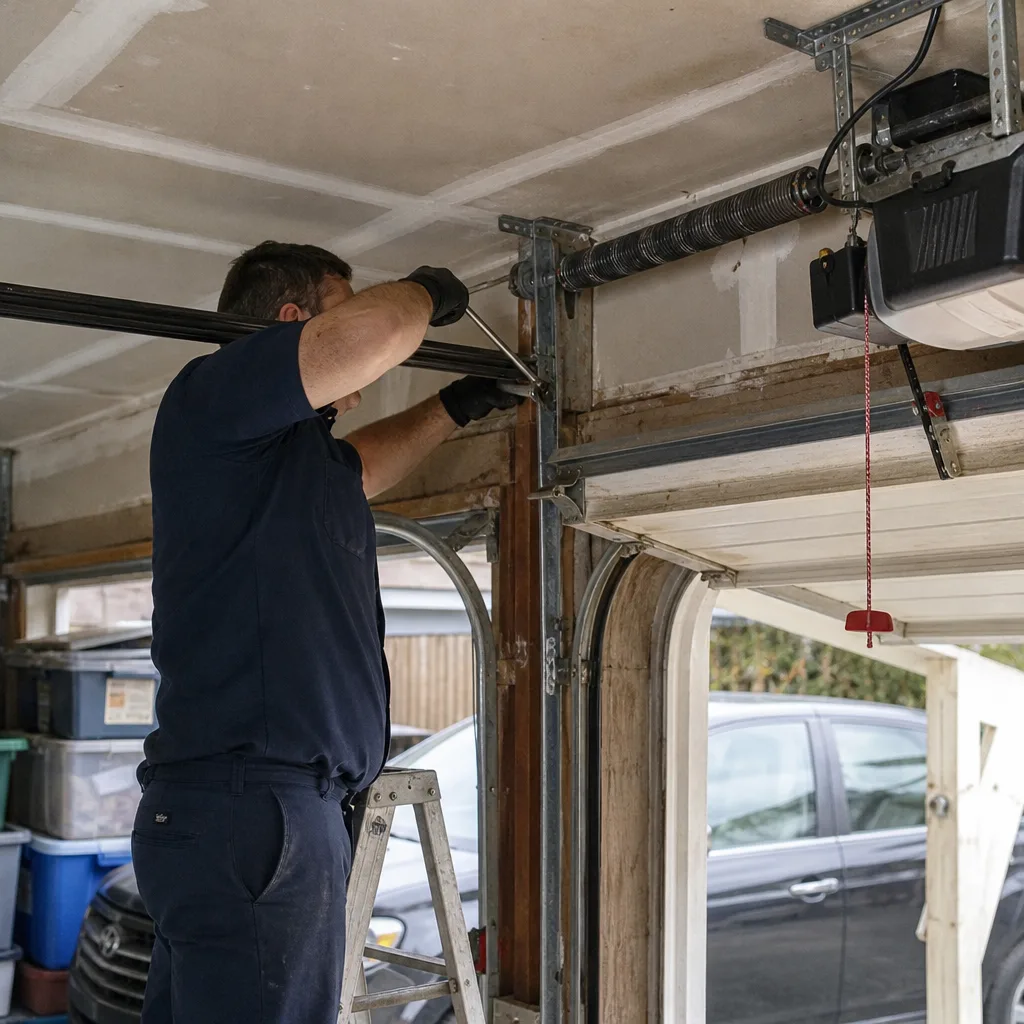 Before
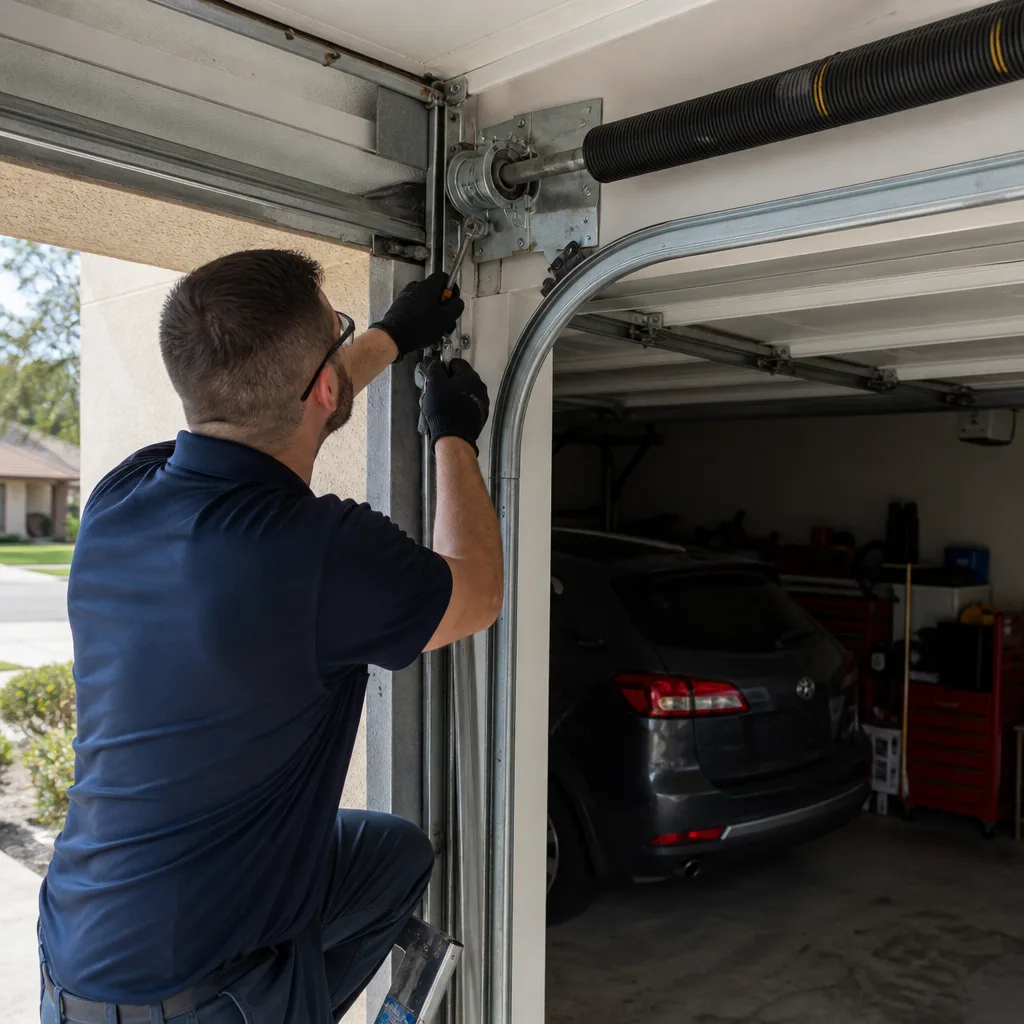 After
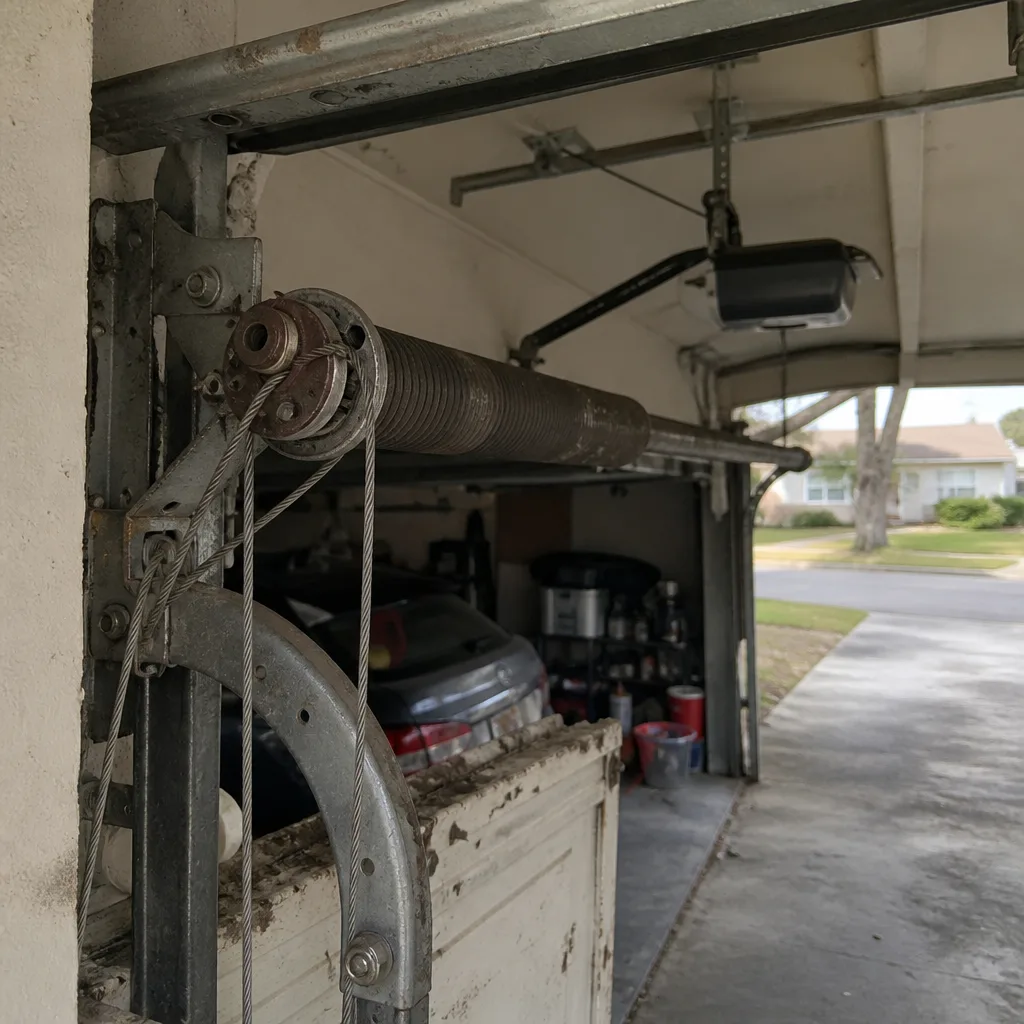 Before
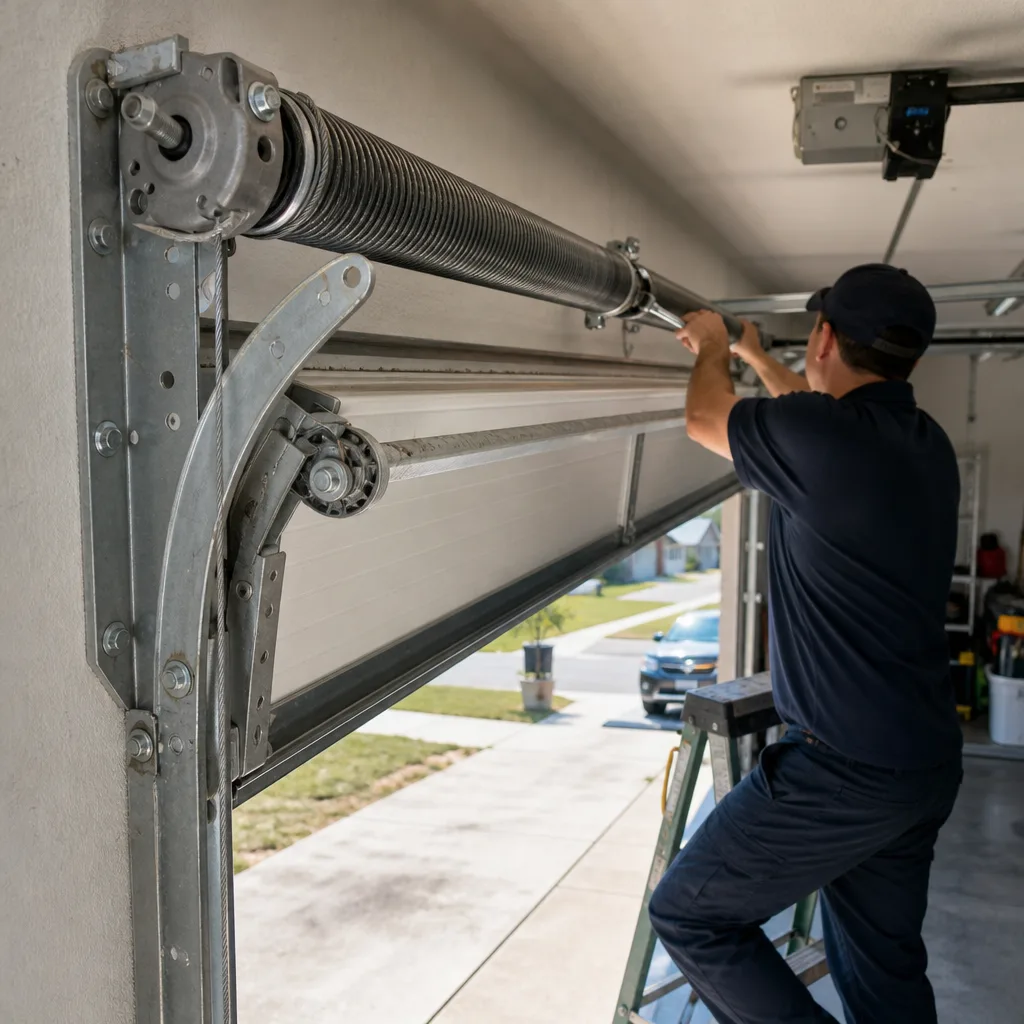 After
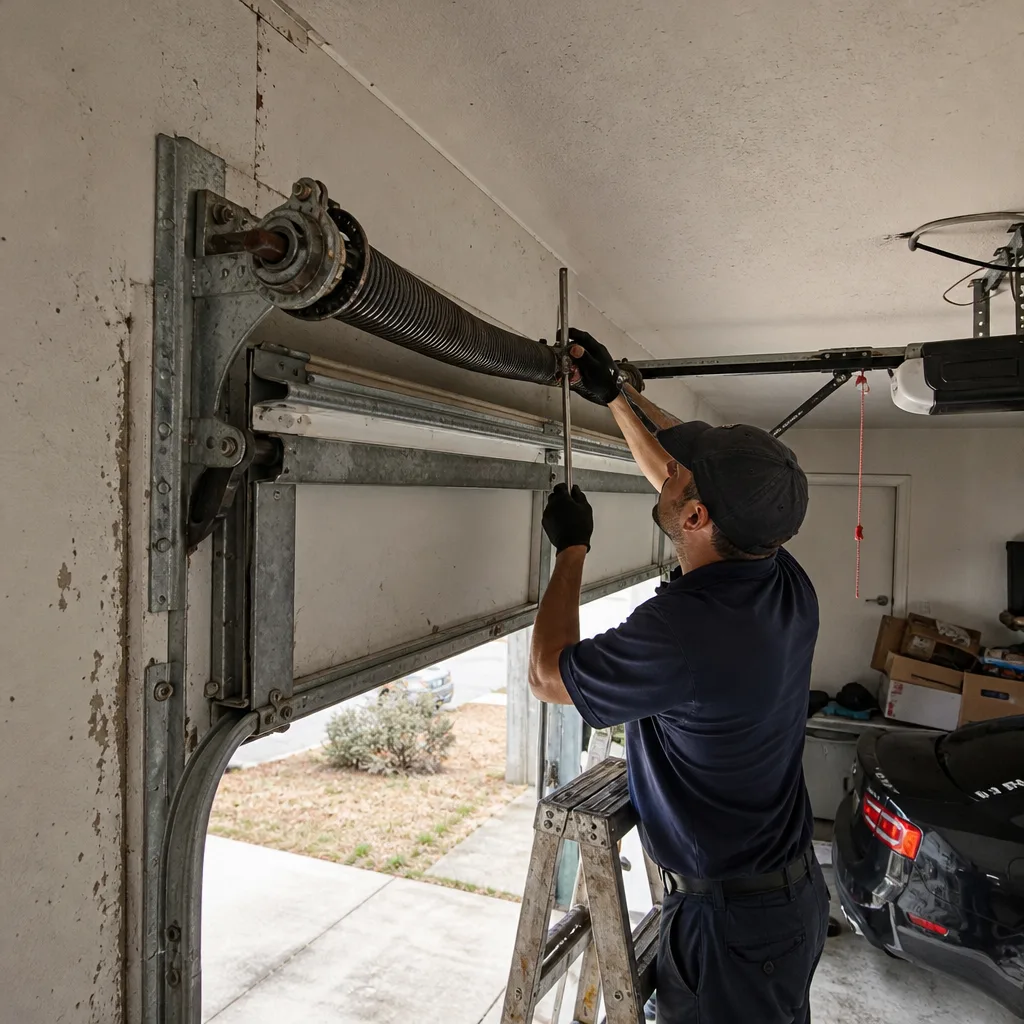 Before
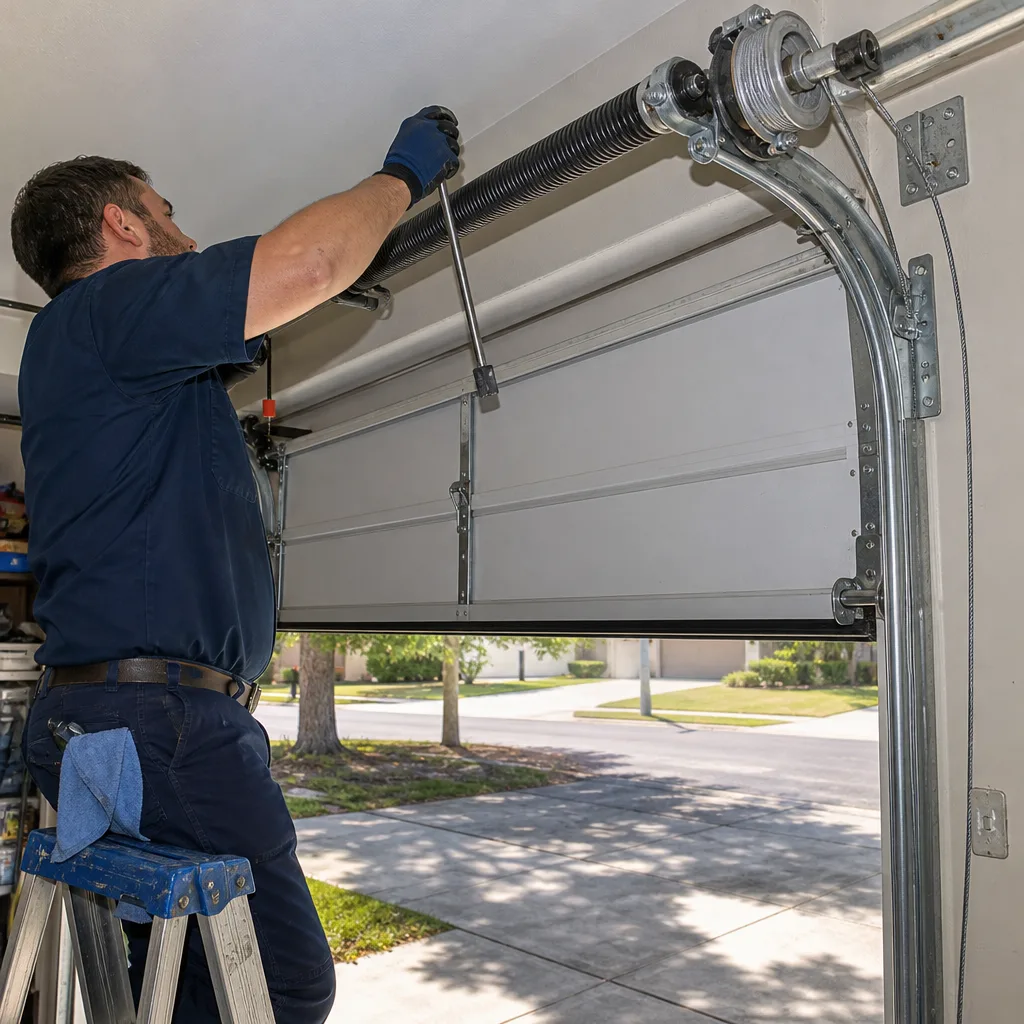 After
When to Call a Professional
The line is clear enough to state in one paragraph. Call a professional when the component you’re touching stores mechanical energy (springs, cables under tension), when the repair gets inspected by Osceola County (full door replacement), when the manufacturer requires certified installation for warranty coverage (most LiftMaster, Chamberlain, and Genie openers), or when you’ve attempted a fix and the door still isn’t operating smoothly. That last scenario is more common than you’d think. By the time a Kissimmee homeowner calls us, roughly a third of them have already tried a DIY fix that didn’t hold. The repair-first approach means we diagnose before we sell. We service the brand you have, whether that’s a Clopay door with a Chamberlain opener or an Amarr door with a Genie. Journeyman Garage Door Repair offers free estimates in Kissimmee. Call (833) 589-8916 and we’ll tell you honestly whether the job is worth a service call or whether it’s something you can handle with a can of grease and twenty minutes.
Frequently Asked Questions
Yes, with one exception. Repairs including spring replacement, roller replacement, cable work, and opener repair require no permit in Kissimmee or Osceola County. A full garage door replacement technically requires a permit because it’s classified as a structural improvement, and the work must meet Florida wind-load standards. You can pull your own permit as a homeowner, but the installation must pass inspection.
Never attempt torsion spring replacement, extension spring adjustment, or cable re-seating on a garage door. These components are under enough tension to cause fatal injury or amputation if they release unexpectedly. The cost of professional repair for these jobs in Kissimmee is $150 to $340, far less than the medical bills and lost work time associated with even a minor garage door injury.
In many cases, yes. LiftMaster and Chamberlain require professional installation for full warranty coverage on most models. The motor warranty can drop from lifetime to a limited period, or the claim can be denied entirely. Genie has similar provisions on premium models. If warranty coverage matters to you, professional installation is the safer route.
Kissimmee pricing for common repairs: spring replacement $180 to $340, cable replacement $150 to $200, opener repair $120 to $250, track realignment $100 to $175, and full door installation $1,200 to $3,500 depending on door quality and insulation rating. These are market ranges, not quotes. Call (833) 589-8916 for a free estimate on your specific door.
We recommend professional inspection and tune-up every 18 to 24 months for most Kissimmee homes, and every 12 months if your door is older than 10 years or operates more than four cycles per day. Florida’s heat and humidity accelerate spring fatigue and roller wear, so the interval is shorter here than in northern climates. A tune-up typically costs $79 to $129 and catches the failures that become expensive repairs later.
Yes, individual panels can be replaced, but there are limits. If the door is more than 15 years old, the color may not match even from the same manufacturer. If the damage is on the bottom panel, the strut reinforcement must be reinstalled correctly or the door loses wind-load integrity. And if two or more panels are damaged, replacement is usually more cost-effective than panel replacement. Call (833) 589-8916 for an honest assessment of your specific situation.
The Bottom Line
The DIY vs professional decision for garage doors in Kissimmee comes down to three filters: stored energy, code inspection, and warranty language. If the job involves springs or cables under tension, hire a professional. If the job involves a full door replacement, hire a professional who understands Florida wind-load requirements. If the job involves an opener installation where the warranty matters to you, hire a professional certified by the manufacturer. Everything else, lubrication, sensor alignment, weatherstripping, cosmetic touch-up, is genuinely DIY territory, and a competent homeowner in Kissimmee should feel confident doing that work. The goal isn’t to make you dependent on service calls. It’s to make sure the service calls you do make are the ones that keep you safe.
Written by the team at Journeyman Garage Door Repair, serving Kissimmee since 2011.