
Last updated October 31, 2026
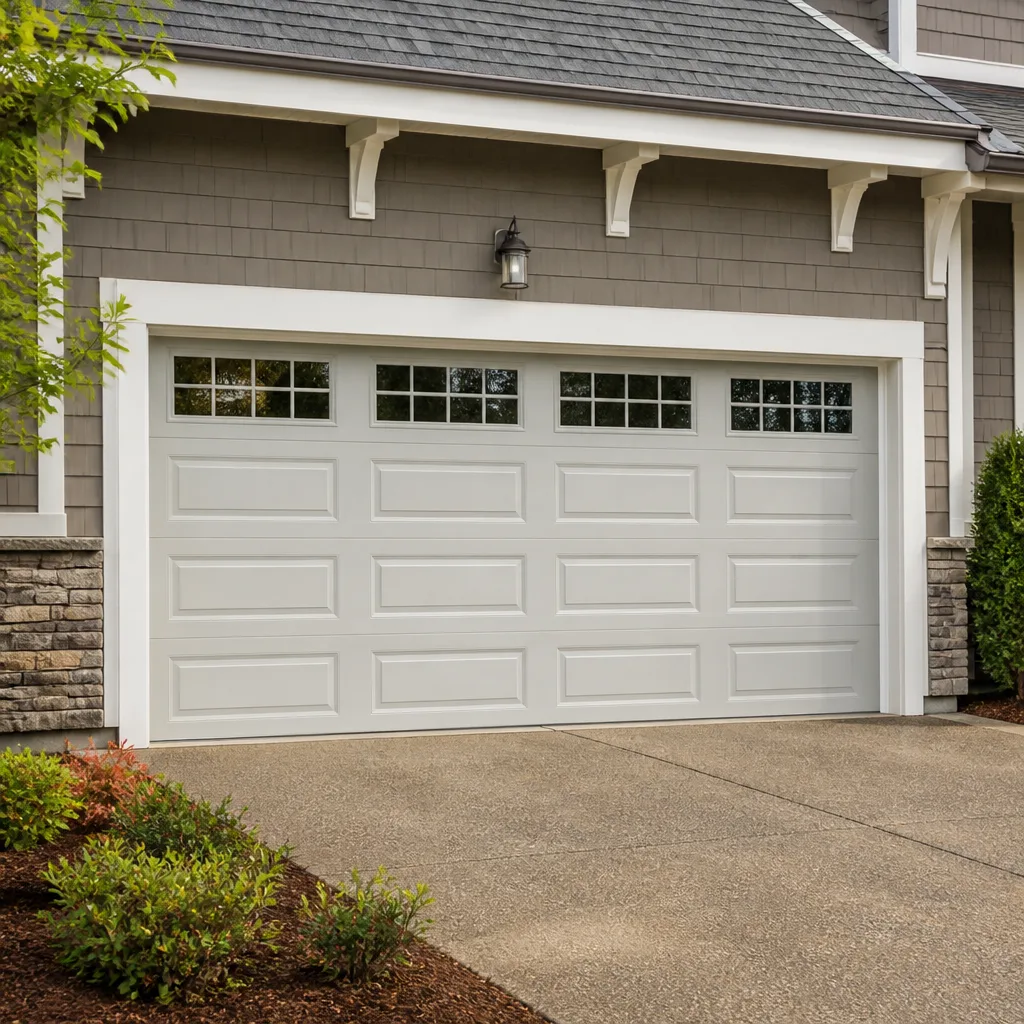 Raised-panel steel
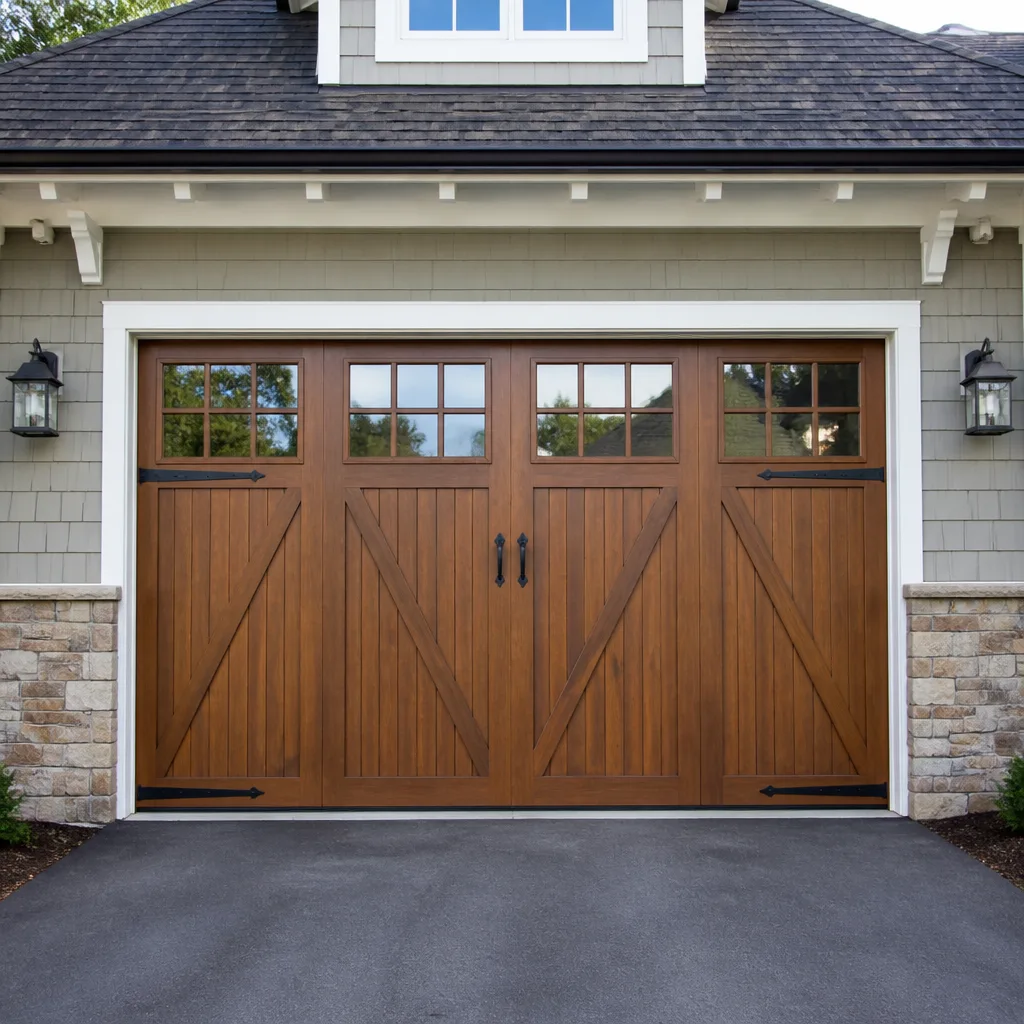 Carriage house
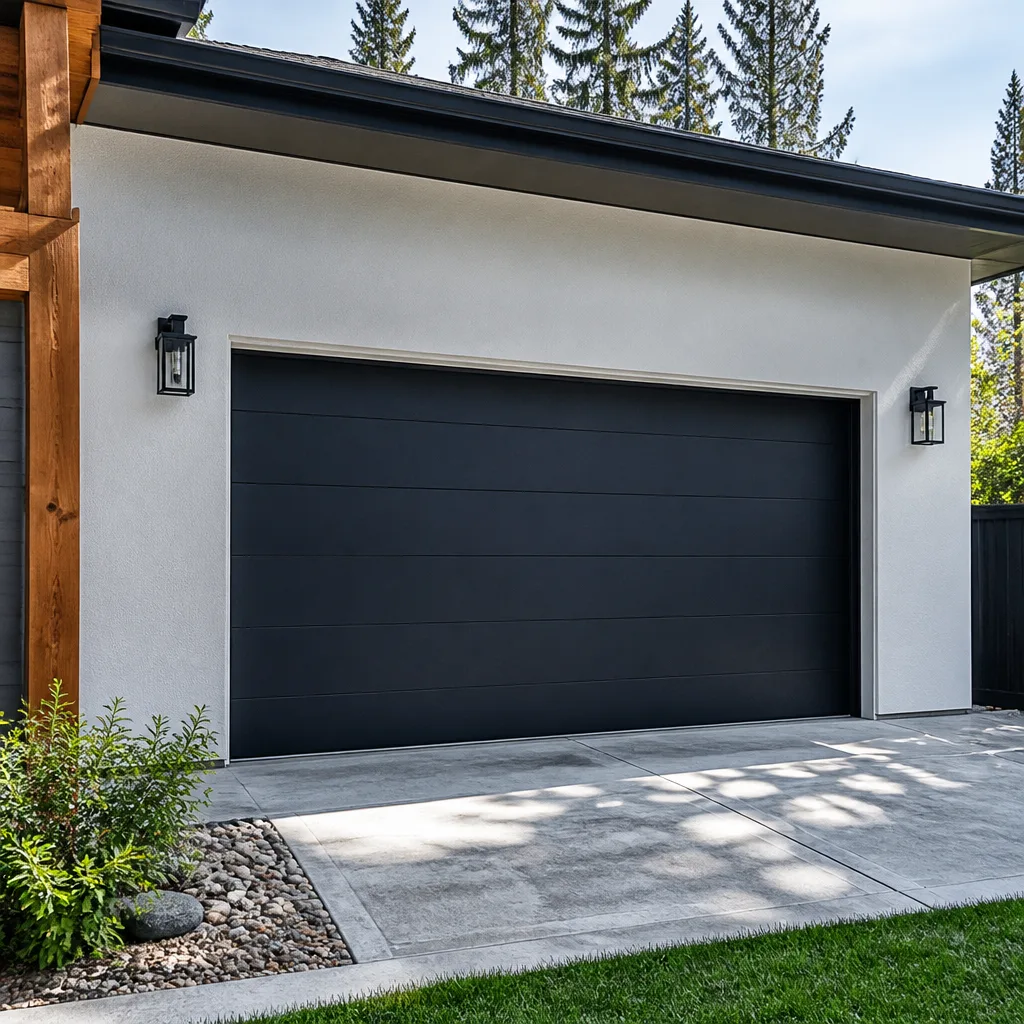 Modern flush
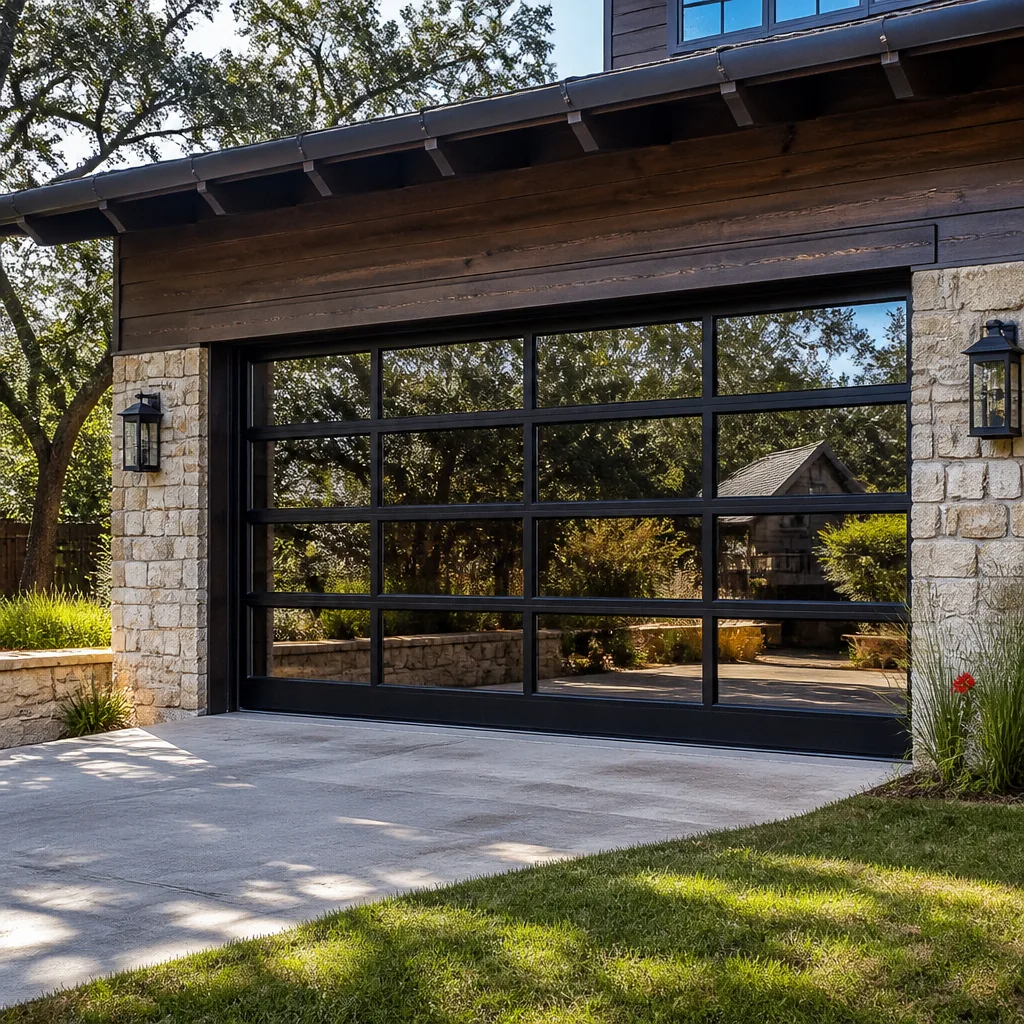 Full-view glass
 LiftMaster openers
 Chamberlain openers
Full 25-point door and opener safety check with every visit - springs, cables, rollers, tracks, and your LiftMaster or Chamberlain opener included
You get a price before we start. It does not change when the truck arrives.
Get your free estimateThe Complete Garage Door Repair Guide for Kissimmee Homeowners
Central Florida humidity averages above 70% year-round. That single fact explains why a garage door repair that holds up fine in Phoenix or Las Vegas can fail again in Kissimmee within 18 months. Most repair guides online are written for a generic American homeowner, and they miss what actually breaks doors here: salt air moving inland from the coast, wet-season moisture cycling, and UV exposure that turns cheap panels brittle. This guide is different. We wrote it for Kissimmee specifically, and we’ll walk you through what fails first, what to check before you call anyone, and when DIY vs Professional Garage Door: The Kissimmee Homeowner’s Decision Guide can help you choose repair over replacement.
Styles & brands we work with
Quick Answer
Most garage door problems in Kissimmee trace back to Florida-specific root causes: humidity-driven spring fatigue, corrosion on hardware from salt and moisture, and UV degradation on panels and seals. Start by inspecting your torsion springs, bottom seal, and roller hardware before assuming the opener is the problem. For our Garage Door Repair services and free estimates in Kissimmee, call Journeyman Garage Door Repair at (833) 589-8916.
Table of Contents
- Why Florida Climate Changes How Garage Doors Fail
- The Diagnostic Order Kissimmee Homeowners Should Follow
- Torsion Spring Fatigue in High-Humidity Environments
- Which Garage Door Materials Hold Up in Osceola County
- Repair vs. Replace: The Decision Tree for Florida Homes
- Seasonal Maintenance Checklist for Kissimmee’s Wet and Dry Seasons
- Garage Door Opener Repair: What Actually Breaks in Kissimmee
- Common Mistakes to Avoid
- When to Call a Professional
- Frequently Asked Questions
- The Bottom Line
Why Florida Climate Changes How Garage Doors Fail
A garage door in Kissimmee is fighting an environment that doors in most of the country never see. We’re not talking about occasional rain. We’re talking about months where the dew point stays above 70 degrees, where afternoon thunderstorms dump two inches of rain in an hour, and where the UV index hits extreme levels for weeks at a stretch from May through September. All three of these forces attack different parts of the door system at the same time.
Humidity is the quiet killer. High moisture levels don’t just cause surface rust. They penetrate into torsion spring coils, accelerating metal fatigue through a process called corrosion fatigue. A standard torsion spring rated for 10,000 cycles in a dry climate might only deliver 6,000 to 7,000 cycles in Kissimmee before it snaps. The coating on the spring matters, and so does the thickness of the wire, but the environment is working against both.
Salt air reaches farther inland than most people realize. Kissimmee sits roughly 45 miles from the Atlantic and 70 miles from the Gulf, and coastal moisture carries microscopic salt particles into the interior on prevailing winds. Over time, that salt accelerates corrosion on hinges, brackets, cables, and roller stems. Homeowners near lakes in Osceola County deal with a milder version of this, but the underlying pattern is the same: metal components that would last 15 years in Ohio need attention at 8 to 10 years here.
Then there’s UV. Sunlight in Central Florida is relentless, and garage doors on south-facing or west-facing elevations take a beating. Vinyl seals dry out and crack. Fiberglass panels fade and lose structural integrity. Cheap steel doors with thin factory paint develop micro-cracks in the finish, then rust blooms wherever moisture finds bare metal.
Understanding these three forces changes how you diagnose problems. When a door starts running rough in Kissimmee, the cause is rarely a single broken part. It’s usually several components degrading at different rates, all influenced by the same climate conditions. That’s why the work we do at Journeyman Garage Door Repair home focuses on diagnosis first, because treating the symptom without understanding the climate-driven root cause means the door will be back in the same condition within a year or two.
The Diagnostic Order Kissimmee Homeowners Should Follow
Before you call a repair company, there’s a diagnostic sequence worth running—see also The Complete Guide to Garage Door in Kissimmee for deeper context. Thirty minutes of inspection can tell you whether you’re dealing with a $15 part or a $400 spring system, and in our experience, Kissimmee homeowners who do this first make better decisions about what they actually need. Here’s the order we recommend.
- Check the bottom seal first. Look at the rubber strip along the bottom edge of the door. In Kissimmee’s wet season, this seal absorbs water constantly. If it’s dry-rotted, cracked, or lifting away from the aluminum retainer, water is getting under the door. That water raises humidity inside the garage, which then accelerates corrosion on everything else. A bad bottom seal is also a direct entry point for pests, which are more active in Central Florida than most regions of the country.
- Inspect the rollers and hinges. With the door closed, look at the roller stems and the hinge plates connecting the panels. Rust-colored staining around the roller brackets is a sign that moisture has compromised the bearings. If rollers wobble when you push the door slightly with your hand, they’re worn and adding friction to the entire system.
- Examine the cables. On the sides of the door, the lift cables run from the bottom brackets up to the drums at the top. Look for frayed strands, rust spots, or kinks. In Kissimmee, cable failure often follows bottom-seal failure, because water intrusion rusts the cable anchor at the bottom bracket first.
- Check the torsion springs. Torsion springs are mounted on the bar above the door. Look for a visible gap in the spring coil, which means the spring has snapped. Also look for rust scale on the coil surface and any irregular spacing between coils. We cover spring failure signs in detail below.
- Test the balance. Disconnect the opener by pulling the red emergency release handle. Lift the door manually to about waist height and let go. A balanced door stays in place. If it drops, the springs are weak or broken. If it shoots up, the springs are over-tensioned. Both are problems that need a trained technician, because the springs on a garage door are under extreme tension in any state.
- Listen to the opener. Run the opener through a full cycle and listen. Grinding suggests a worn gear. Humming without movement suggests a broken logic board or a failed capacitor. Chain rattling suggests the chain needs tensioning. These sounds point to opener repairs, which are separate from door repairs.
This sequence works because it follows the path moisture takes through the system. Kissimmee’s climate attacks from the bottom up: water first, then rust, then mechanical failure. If you identify the bottom seal as the point of entry and address it early, you slow down the degradation of everything above it.
Torsion Spring Fatigue in High-Humidity Environments
Torsion spring failure is the most common garage door breakdown in Kissimmee, and the reason is more nuanced than most guides admit. Springs are rated by cycle count, usually between 10,000 and 20,000 cycles depending on quality. In a dry climate, a 10,000-cycle spring might last 7 to 10 years. In Kissimmee, the same spring frequently fails at 5 to 7 years. The reason is humidity-driven corrosion, which creates microscopic pits on the spring wire surface. Those pits become stress concentrators, and every cycle of opening and closing flexes the metal at exactly those points.
There are early warning signs that a spring is nearing the end of its life, and they’re visible if you know what to look for:
- Visible rust scale forming on the coil surface, especially at the ends near the winding cones
- A creaking or popping sound when the door opens or closes, which happens as the spring coils shift over rusted or pitted surfaces
- A door that feels heavier than it used to when you open it manually, even if the opener still moves it
- Uneven coil spacing, which indicates the spring is stretching and losing tension
- A door that opens slower near the top of its travel, because the spring no longer has enough force to assist the opener through the full cycle
We want to be direct about this: torsion springs are dangerous. They are wound under tension, and attempting to adjust or replace one without proper training and tools can cause serious injury or death. This is not a task for a YouTube tutorial. In Kissimmee, where spring corrosion is common, the danger is amplified because a rusted spring can fail unpredictably during handling. If you see any of the warning signs above, call a professional. The repair cost is a fraction of what a spring failure mid-cycle can do to panels, cables, and even vehicles in the driveway.
One more thing worth knowing: when one spring fails on a two-spring door, the other is almost certainly near the end of its life too. A journeyman-level technician will recommend replacing both springs together, because the labor cost of doing them separately far exceeds the cost of the second spring. This is standard trade practice, not an upsell.
Which Garage Door Materials Hold Up in Osceola County
If you’re repairing versus replacing, or if you’re planning ahead for your next door, material choice matters more in Kissimmee than in most markets. The combination of humidity, heat, and UV exposure eliminates some options that work fine elsewhere. Here’s how the common materials perform in Osceola County specifically.
Steel Doors: The Best Balance for Most Kissimmee Homes
Steel remains the most common garage door material in Kissimmee, and for good reason. It handles humidity well when the gauge is thick enough, and it resists warping, which is the biggest problem with cheaper alternatives. The key variable is gauge. A 24-gauge steel door is light and inexpensive, but it dents easily and transfers heat efficiently. A 26-gauge door is better. Doors rated 28-gauge or thicker (lower number means thicker steel) are the standard for durability in Florida, especially if the home faces south or west and takes full afternoon sun.
The weak point of steel in Kissimmee is the paint system. Factory finishes from quality manufacturers like Clopay and Amarr hold up well, but any scratch that exposes bare metal becomes a rust point in humid air. After any impact, touch-up paint matters more here than it would in Colorado.
Aluminum Doors: Lightweight but Fragile in Storms
Aluminum resists corrosion better than steel, which sounds ideal for a humid climate. But aluminum doors are structurally weaker, and Kissimmee sees strong thunderstorm winds that can flex a lightweight aluminum panel beyond its limits. Aluminum also transfers heat rapidly, which matters when the garage is attached to the house and the door faces west. We’ve seen aluminum doors that performed fine for years, but they’re usually better suited to carriage-house aesthetics than daily-use, full-size openings.
Wood Composite and Solid Wood: Beautiful but High-Maintenance Here
Solid wood doors are rare in Kissimmee for practical reasons. High humidity causes wood to absorb moisture, swell, and eventually rot, especially at the bottom panel and around any exposed edges. Even with regular sealing, a wood door in Central Florida needs refinishing every 2 to 3 years to stay protected. Wood composite doors, made from resin and wood fiber, resist moisture better than solid wood but still require more maintenance than steel. For most Kissimmee homeowners, wood is a choice for aesthetics, not longevity, and anyone choosing it should be prepared for the upkeep.
Fiberglass: Fades Under Florida Sun
Fiberglass doors have one notable advantage: they don’t rust and they don’t rot. But fiberglass panels degrade under sustained UV exposure, and Kissimmee’s summer sun is among the most intense in the country. Over time, the gel coat finish turns chalky and brittle. If the home has heavy tree cover or the garage faces north, fiberglass can work. For south-facing and west-facing doors, steel is the safer choice.
Repair vs. Replace: The Decision Tree for Florida Homes
Kissimmee homeowners face a different repair-versus-replace calculation than homeowners in drier or cooler regions. The question isn’t just “what’s broken now” but “what’s going to fail next given our climate.” Here’s a practical decision framework we use when evaluating doors in the area.
- Assess the panel condition first. If panels are warped from moisture, buckled from heat, or rusted through in multiple places, replacement starts to make more sense. Replacing two or more panels on a door that’s already 10+ years old often costs 60 to 70 percent of a new door, and the old panels are likely to fail again under the same conditions. In Kissimmee, panel warping at the bottom of the door is common, and that warp also compromises the seal at the floor.
- Check the bottom seal and retainer. The bottom seal is a wear item that needs replacement every 2 to 4 years in Kissimmee’s climate. That’s a repair, not a reason to replace the door. But if the aluminum retainer channel is corroded through or the bottom panel is soft from water damage, the repair cost climbs and replacement becomes more attractive.
- Evaluate the spring system. Springs are always a repair, not a replacement trigger. Even high-quality doors need spring replacement every 5 to 8 years in Florida. A new door with the same springs will face the same timeline.
- Look at the track and hardware. Rusted tracks can sometimes be cleaned and reused, but if the vertical or horizontal track sections are pitted or bent, replacement is more cost-effective than trying to salvage them. Heavy rust on the track is a Florida-specific issue, and it’s a signal that the rest of the hardware has similar degradation.
- Factor in energy efficiency. If the door faces west or south and the garage is attached to living space, upgrading to an insulated steel door can reduce heat transfer meaningfully. This isn’t just comfort; it reduces load on the HVAC system if the home has a conditioned garage or an adjacent living space. Kissimmee’s summer heat makes insulation more valuable here than in many markets.
As a rule, we lean toward repair when the door itself is structurally sound and the failure is mechanical. A door with solid panels, a functioning opener, and a recent spring replacement is worth keeping. When panel integrity is compromised or the hardware is rusted through in multiple places, replacement is often the better long-term investment. A specialist can evaluate this honestly, and you should expect a repair-first recommendation when the door has life left in it.
Seasonal Maintenance Checklist for Kissimmee’s Wet and Dry Seasons
Kissimmee doesn’t have four seasons. It has two: a wet season from roughly May through October and a dry season from November through April. Both bring different challenges for garage doors, and a maintenance schedule built around those seasons is far more useful than a generic 12-month calendar.
Wet Season Checklist (May through October)
- Inspect the bottom seal monthly. During heavy rain, water ponds at the garage threshold. Check the seal for cracks, splits, and proper contact with the floor. Replace it the moment gaps appear.
- Apply a light lubricant to hinges and rollers every 60 days. Use a silicone-based or white lithium lubricant, not WD-40, which cleans but doesn’t lubricate. High humidity accelerates friction on moving metal parts.
- Check for rust formation on springs and cables. The wet season is when corrosion shows up fastest. Early detection can mean the difference between minor cleaning and a full spring replacement.
- Clear drainage paths around the garage floor. Kissimmee’s afternoon storms can dump water faster than the ground can absorb it. If the garage has a drainage channel or the driveway slopes toward the door, make sure water has a clear path away from the opening.
- Run the door through a full cycle weekly. If you don’t use the garage daily, cycle the door once a week to keep components moving and prevent the springs from sitting in a static, tensioned state in humid air.
Dry Season Checklist (November through April)
- Wash the door surface with mild soap and water. The dry season is the low-humidity window, which makes it the best time to remove salt deposits, dust, and pollen that accumulated during the wet months. Rinse thoroughly and dry with a soft cloth.
- Inspect the paint and finish. Look for micro-cracks, chips, or any area where bare metal is exposed. Touch these up before the wet season returns. This is the single most effective rust-prevention step for a steel door in Kissimmee.
- Check weatherstripping around the sides and top. The dry season’s lower humidity causes vinyl and rubber to contract, which can reveal gaps that weren’t visible during the wet season. Replace any weatherstripping that has hardened or cracked.
- Test the balance with the opener disconnected. The dry season is the easiest time to manually check spring tension, since bearings and hinges move more freely in lower humidity. If the balance is off, address it before the wet season adds more stress to the system.
- Schedule a professional tune-up. An annual inspection by a technician who understands Florida doors can catch early-stage corrosion and spring fatigue before they become failures. This is preventive maintenance, not an emergency call.
Following this two-season schedule addresses the specific failure patterns we see in Kissimmee. The wet season is about moisture management and corrosion prevention. The dry season is about surface protection and mechanical inspection. Together, they extend the life of every component in the system.
Garage Door Opener Repair: What Actually Breaks in Kissimmee
Garage door openers face a different set of challenges in Kissimmee than in other markets. The heat inside an uninsulated garage in July can exceed 110 degrees, and electronics don’t love sustained high temperatures. Motors run hotter. Circuit boards expand and contract with temperature swings. Gears wear faster under heat. And the humidity plays into it too, causing corrosion on electrical connections and reducing the lifespan of the opener’s internal components.
The most common opener failures we see in the area are:
- Worn drive gears. Most modern openers use a plastic gear on the main drive shaft, and that gear wears faster in high heat. Symptoms include grinding noises, jerky movement, or a door that moves partway and stops.
- Failed logic boards. The control board is sensitive to heat and humidity. When boards fail, the opener may respond unpredictably, lose programming, or stop responding to remotes entirely.
- Capacitor failure. Capacitors help the motor start, and they degrade quickly in hot garages. A humming opener that doesn’t move is often a failed capacitor.
- Sensor misalignment. The safety sensors at the bottom of the door tracks can be knocked out of alignment by vibration, humidity swelling the track brackets, or simply age. When sensors are misaligned, the opener refuses to close.
- Remote and keypad corrosion. Outdoor keypads in Kissimmee are exposed to rain, humidity, and sun. Battery terminals corrode, and the membrane buttons eventually crack under UV exposure.
Here’s the key point on openers: many of these failures are repairable, and a specialist who services LiftMaster, Chamberlain, Genie, and Craftsman openers can usually diagnose the problem and replace the specific failed component rather than selling a whole new unit. Opener replacement is sometimes the right call, especially for units over 12 to 15 years old that use outdated technology. But a repair-first approach means a $45 gear or a $20 capacitor gets replaced instead of a $400 opener, when the rest of the unit still has life in it.
The Garage Door Opener Repair in Lakeland Highlands page on our site covers more detail on specific opener brands and failure modes, and much of that information applies to Kissimmee as well. The same climate issues, the same heat and humidity stresses, just a slightly different ZIP code.
Common Mistakes to Avoid
- Ignoring a bad bottom seal. The bottom seal is the first line of defense against water intrusion in Kissimmee’s wet season. A gap or crack allows water, humidity, and pests into the garage, accelerating corrosion on every other component. Replacing the seal is a simple, inexpensive repair that prevents hundreds of dollars in downstream damage.
- Lubricating with WD-40. WD-40 is a solvent and water displacer, not a lubricant. It strips existing lubrication and leaves surfaces unprotected. In Kissimmee’s humid air, this creates a flash-rust situation on hinges and rollers. Use silicone spray or white lithium grease instead.
- Attempting DIY spring repair. Torsion springs hold thousands of pounds of stored tension. When they unwind unexpectedly, they cause catastrophic injuries. This rule applies everywhere, but Florida’s rusty springs are even more unpredictable during handling. Call a professional for any spring work.
- Replacing the opener before checking the door. When a door is hard to open or slams on the way down, some homeowners assume the opener is failing. Often, the real problem is tired springs or rusted rollers. Replacing the opener without addressing the door means the new opener burns out faster under the same strain.
- Choosing the cheapest door for a south-facing elevation. A thin, non-insulated steel door on a Kissimmee home that faces south or west is a heat liability. It transfers afternoon sun directly into the garage, raising temperatures and shortening the life of anything stored there. A slightly thicker, insulated door pays for itself over time in comfort and durability.
- Skipping the annual inspection. In a dry climate, garage doors can go years without attention. In Kissimmee, the humidity and salt air work on components continuously. An annual inspection catches corrosion and spring fatigue early, turning major failures into minor tune-ups.
- Replacing one spring on a two-spring door. When one torsion spring snaps, the other has been cycling just as long and is just as worn. Replacing both at the same time saves labor cost in the long run and keeps the door balanced. A technician who recommends one spring is not doing you a favor.
When to Call a Professional
Some garage door issues are straightforward homeowner maintenance: replacing a bottom seal, cleaning the photo-eye lenses, lubricating hinges. Others require a trained technician, and the line is usually drawn at anything involving stored tension or structural components. If your torsion springs show rust scale or uneven coils, if the lift cables are frayed, if the door falls when released from the opener, or if the track is bent or coming loose from the wall, stop and call a professional. These are not diagnostics you can complete safely from a ladder, and the cost of a service call is far less than the cost of an injury or the damage from a door that fails under load. Journeyman Garage Door Repair offers free estimates in Kissimmee. Call (833) 589-8916 and we’ll send a specialist who works on the brand you have, not whatever a franchise happens to stock.
Frequently Asked Questions
Garage door repair costs in Kissimmee typically range from $125 to $450 depending on the problem. A bottom seal replacement runs $85 to $150. A single torsion spring replacement runs $180 to $300 installed, while a pair runs $280 to $450. Roller and hinge replacements run $75 to $200 depending on the number of components. Opener gear replacement runs $145 to $225. Call (833) 589-8916 for an exact quote on your specific door, and the price will be agreed before any work starts.
In most cases, yes. Common repairs like spring replacement, roller replacement, and cable repair are jobs our technicians can complete the same day we’re called. We carry parts for the major brands we service, including LiftMaster, Chamberlain, Genie, and Craftsman, on the truck. Call (833) 589-8916 and we’ll tell you when we can be there.
Garage door springs in Kissimmee typically last 5 to 8 years, which is shorter than the 8 to 10 year lifespan common in drier climates. The difference is humidity and salt air, which accelerate corrosion on the spring wire and reduce the effective cycle count. Springs rated for 10,000 cycles may only deliver 6,000 to 7,000 cycles in Osceola County’s climate.
Repair is the right choice when the panels are structurally sound and the failure is mechanical, like a spring, roller, or cable. Replacement makes more sense when multiple panels are warped from moisture or the bottom panel is softened from water intrusion. A good rule is that repairing two or more panels on a door over 10 years old often costs more than half the price of a new door, and the repaired door will still have the same age-related vulnerabilities.
Kissimmee’s humidity accelerates spring metal fatigue, causes rust on hinges and cables, softens the bottom seal, and contributes to panel corrosion wherever paint is chipped or scratched. The effect is cumulative, which means components fail together rather than one at a time. That’s why climate-aware diagnosis and regular maintenance matter more here than in most markets. The Garage Door Repair in Lakeland Highlands page on our site covers similar climate considerations for that nearby market, and the principles translate directly to Kissimmee.
We don’t recommend it. Garage door installation involves tensioning torsion springs, which are under extreme stored energy. The risk of serious injury is real, and the tools and training required are specialized. Additionally, a professionally installed door from a company that handles Garage Door Installation in Lakeland Highlands and Kissimmee will be correctly balanced from day one, which extends the life of the opener and every moving component.
The Bottom Line
Kissimmee’s climate demands more from a garage door than most of the country. Humidity shortens spring life, salt air corrodes hardware, and UV breaks down seals and finishes. The good news is that informed homeowners can catch problems early: inspect the bottom seal often, watch for spring corrosion, lubricate with the right products on a wet-season schedule, and wash and touch up the door surface during the dry months. When repairs are needed, choose a specialist who understands Florida doors and who services the brand you actually have. For more guides & resources on maintaining your door in this climate, visit our blog. The door works, or the job isn’t done. For garage door repair, opener work, or full installation in Kissimmee, call Journeyman Garage Door Repair at (833) 589-8916 for a free estimate.
Written by the team at Journeyman Garage Door Repair, serving Kissimmee since 2011.
See the difference
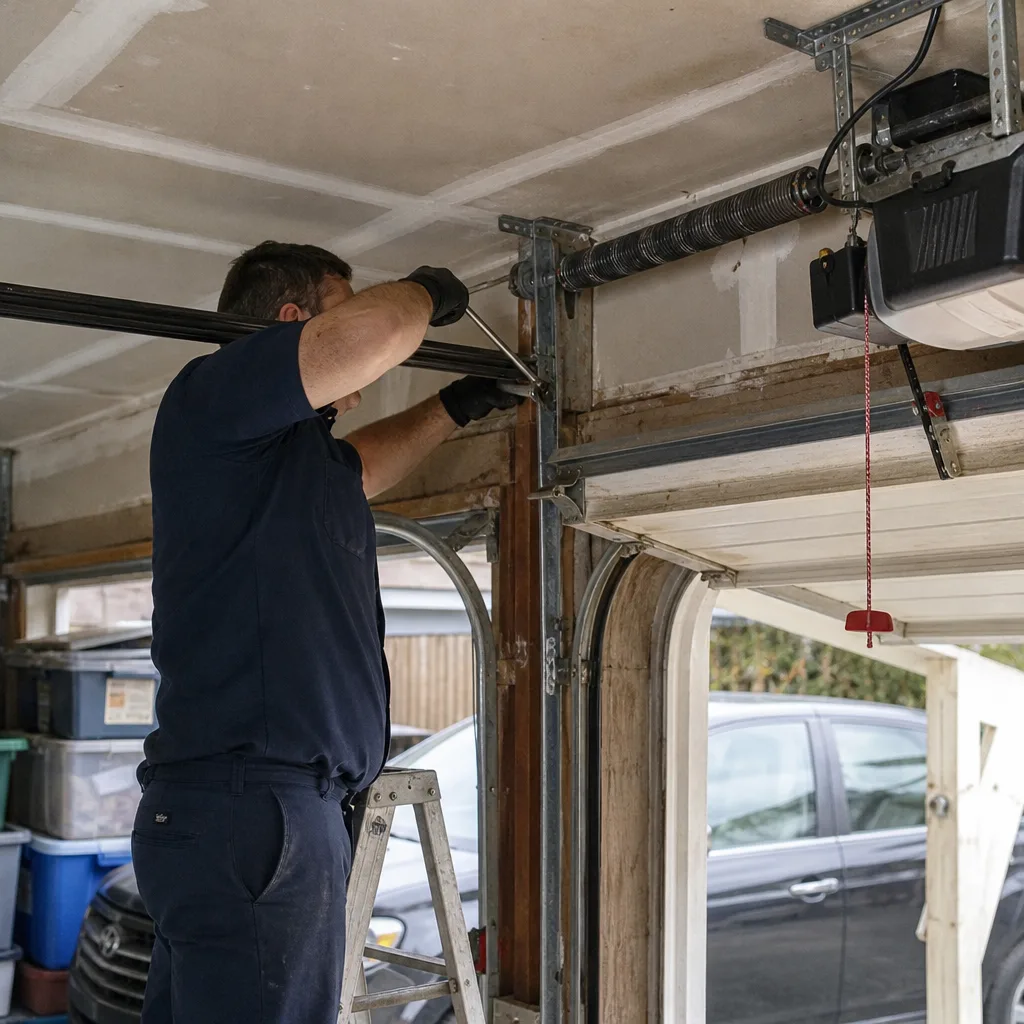 Before
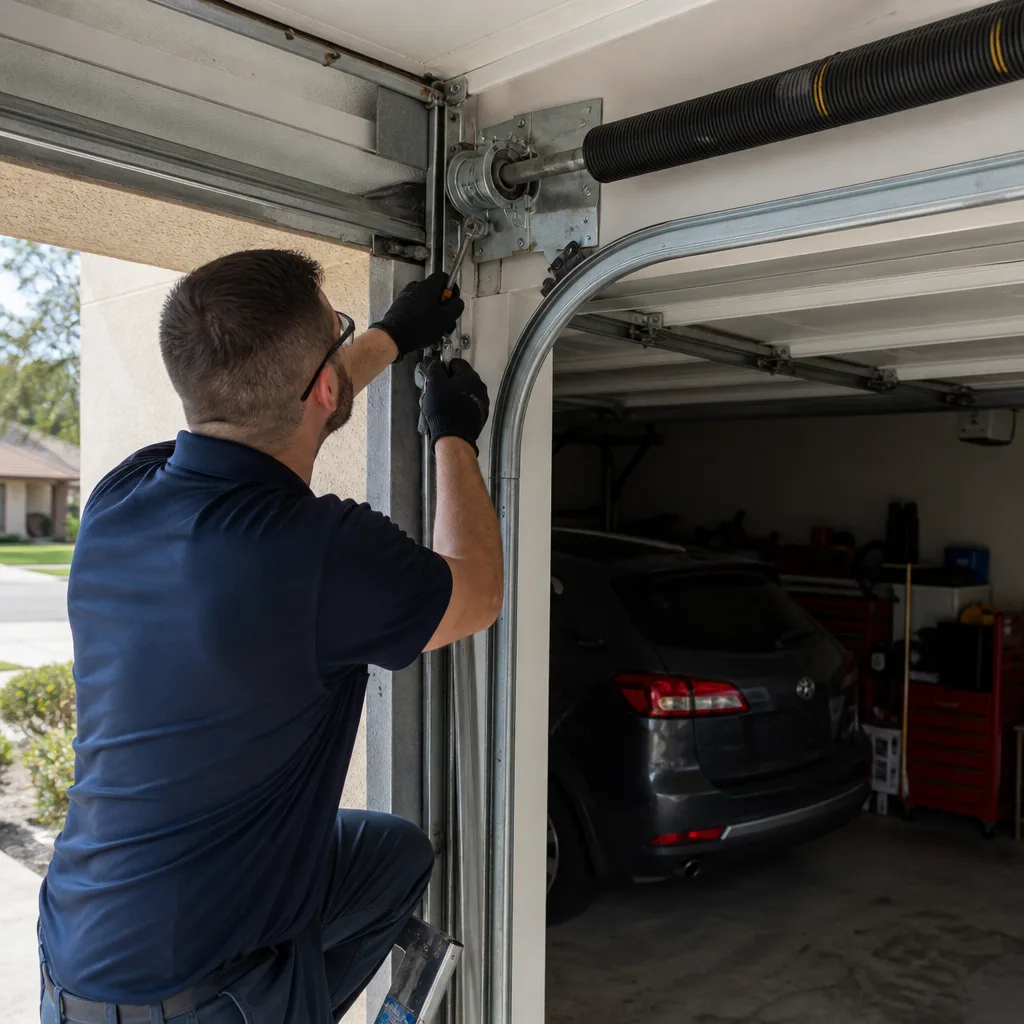 After
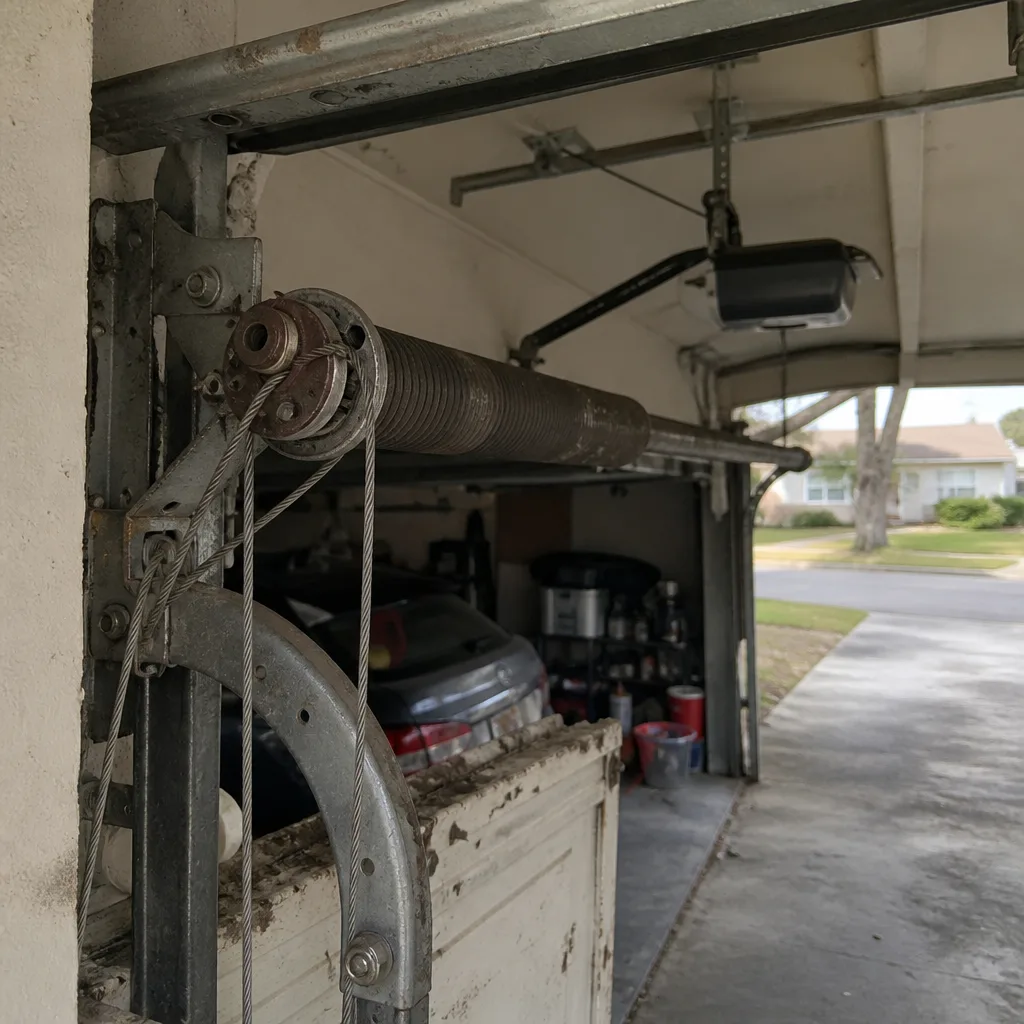 Before
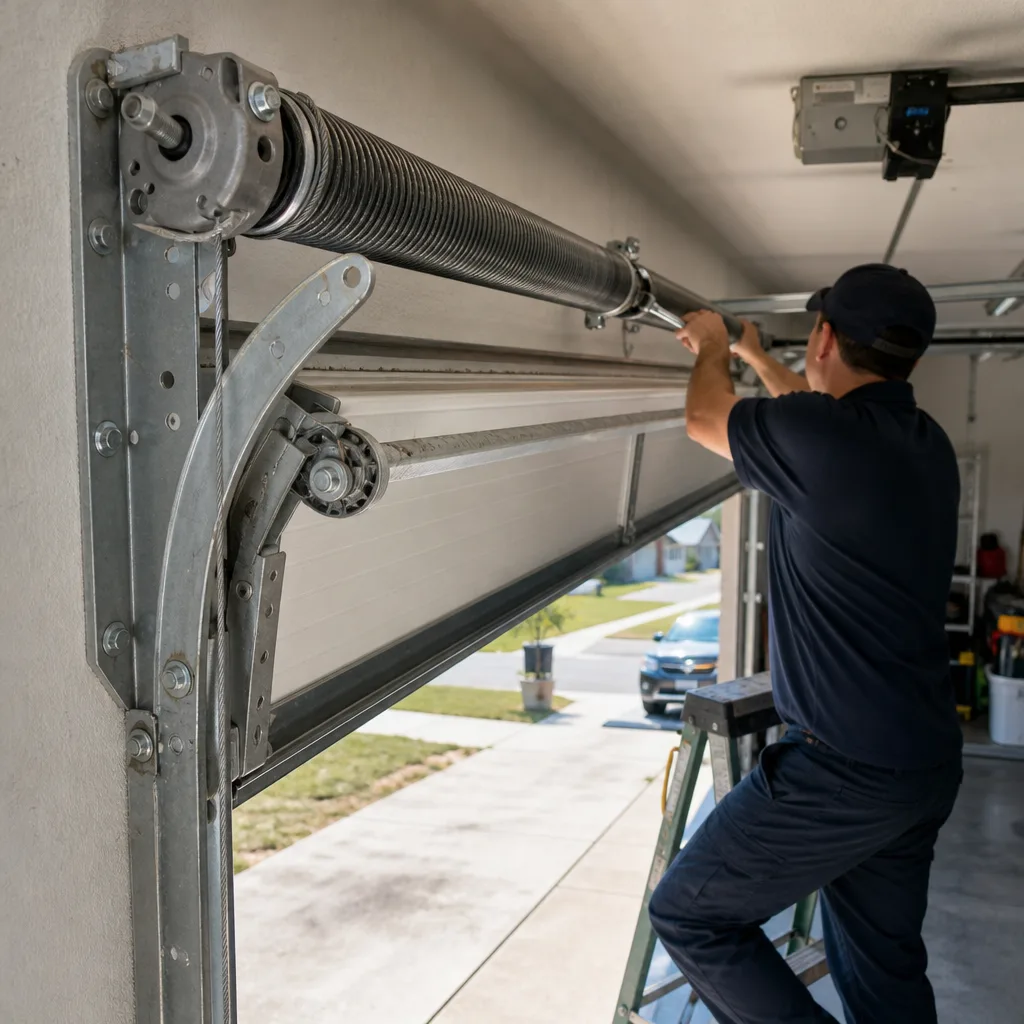 After
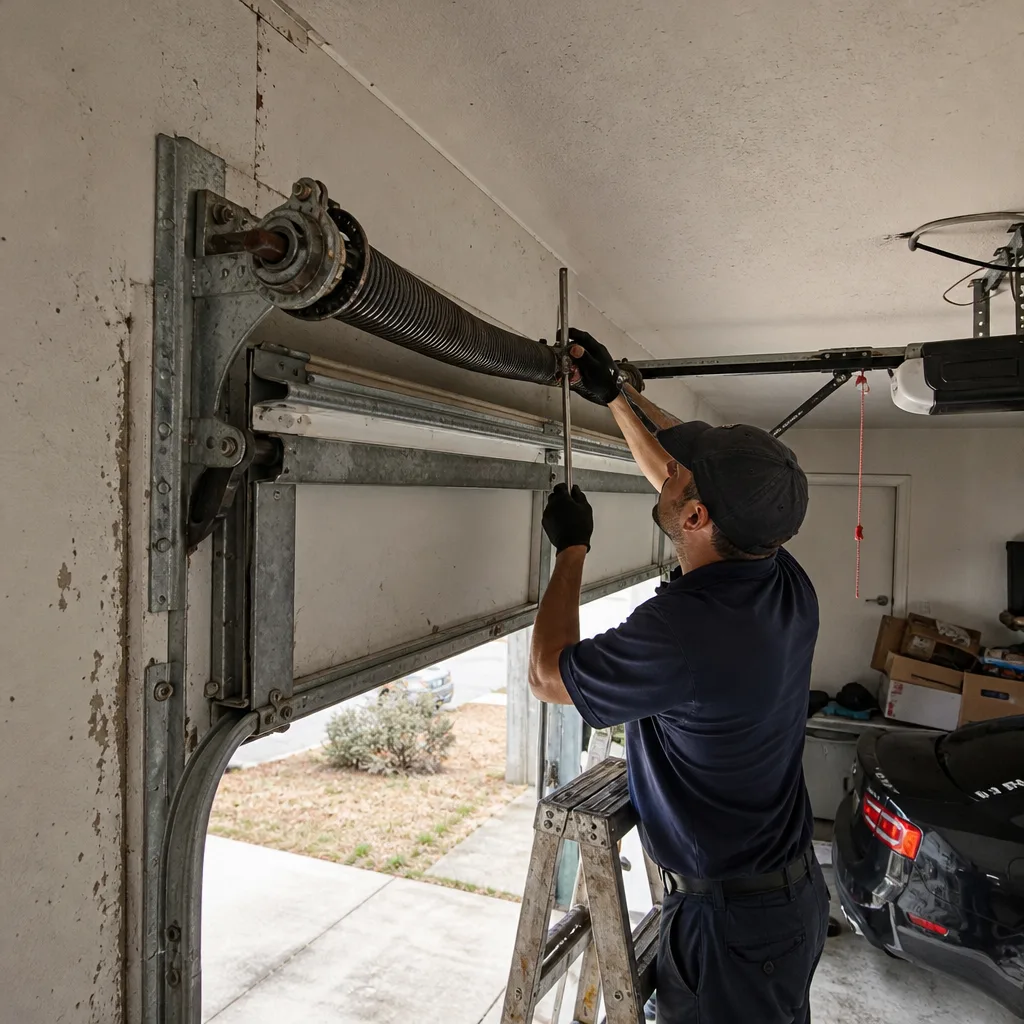 Before
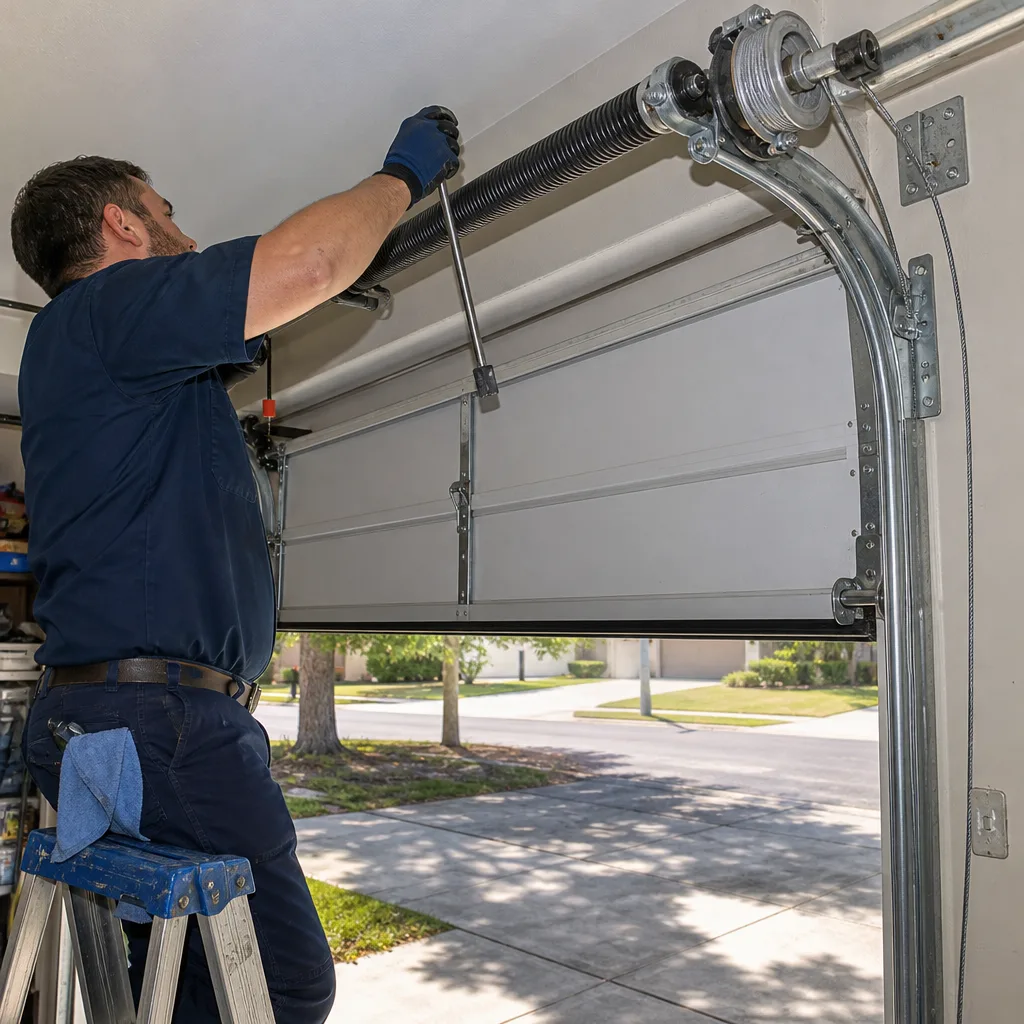 After